



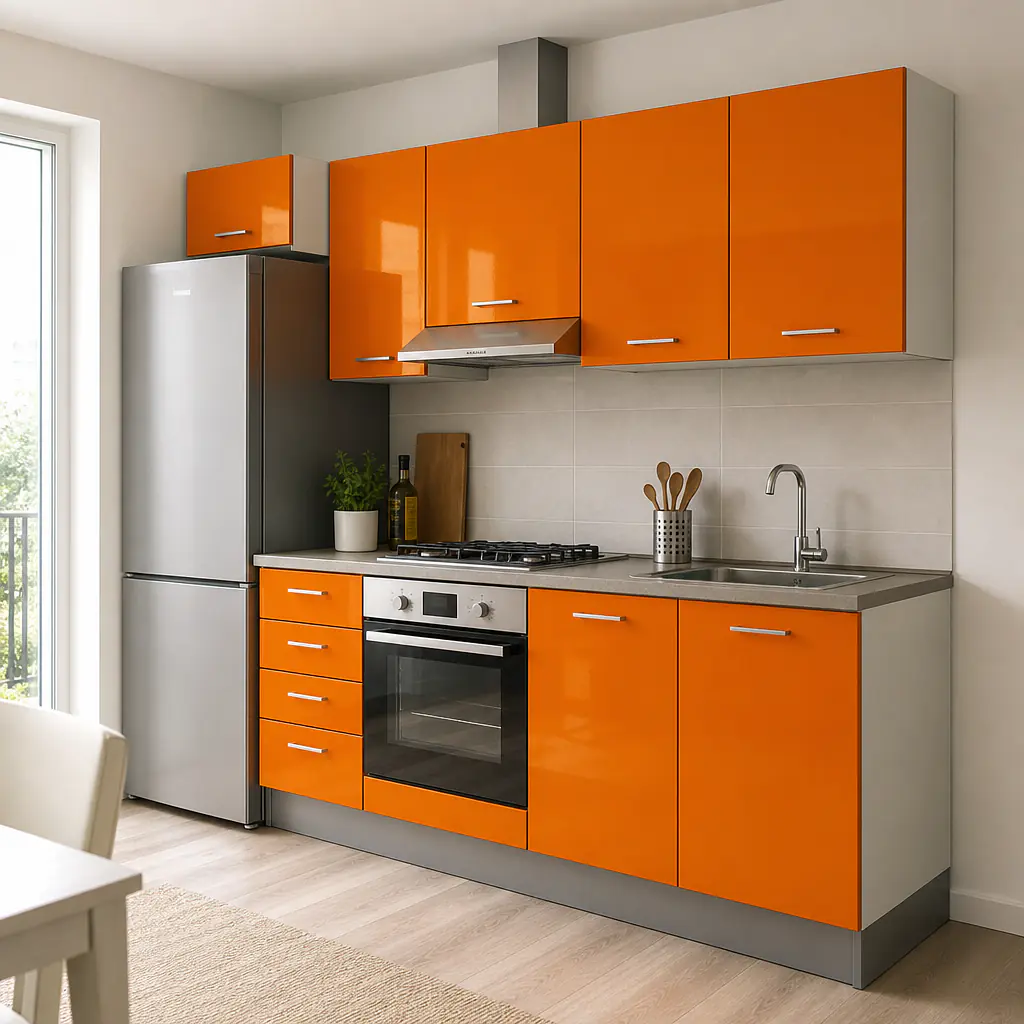
More information about Furniture Film Light Orange Glossy
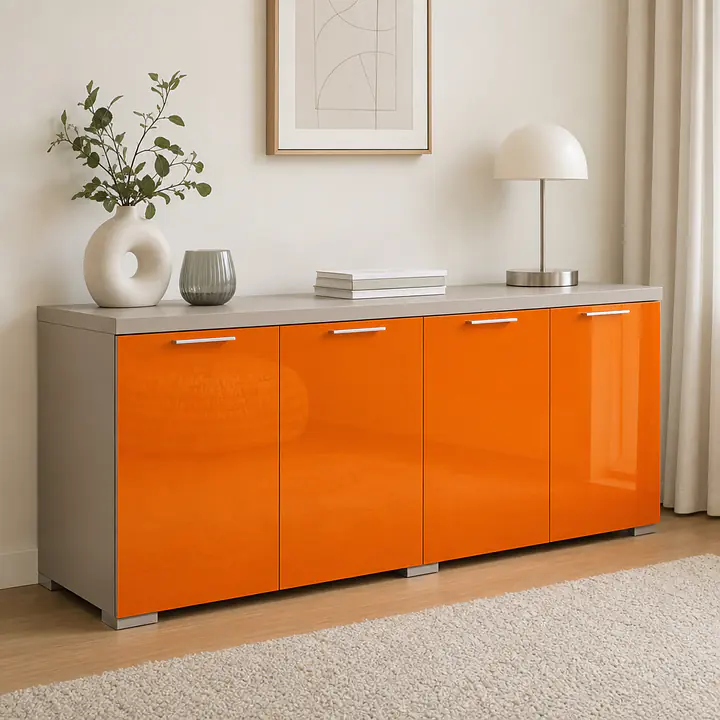
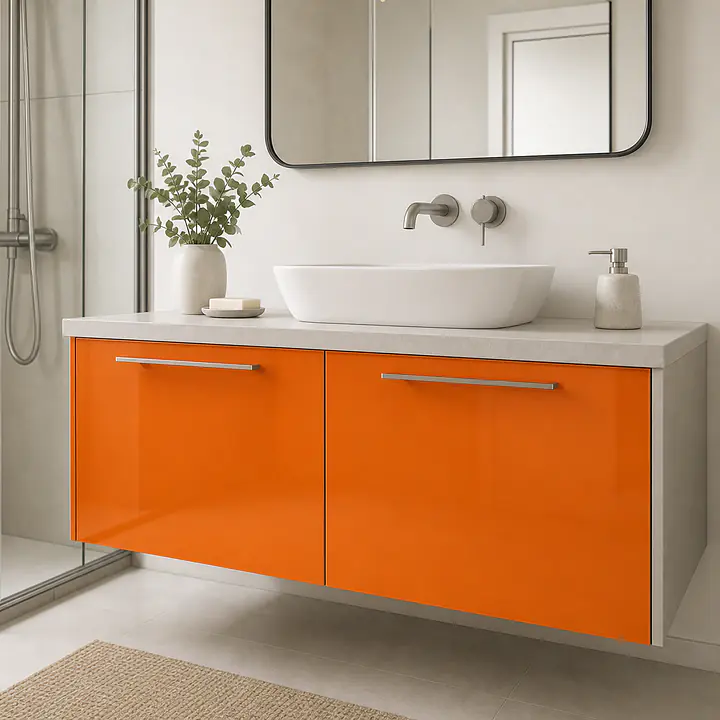
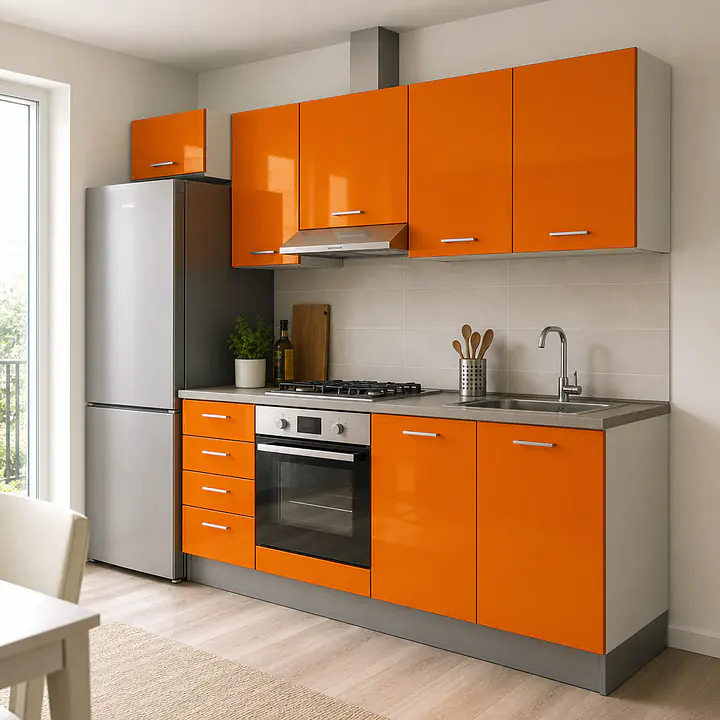
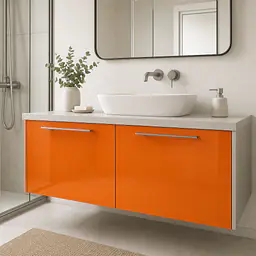
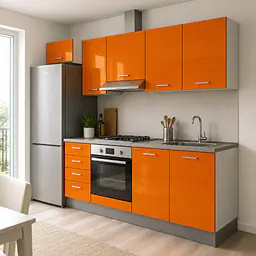
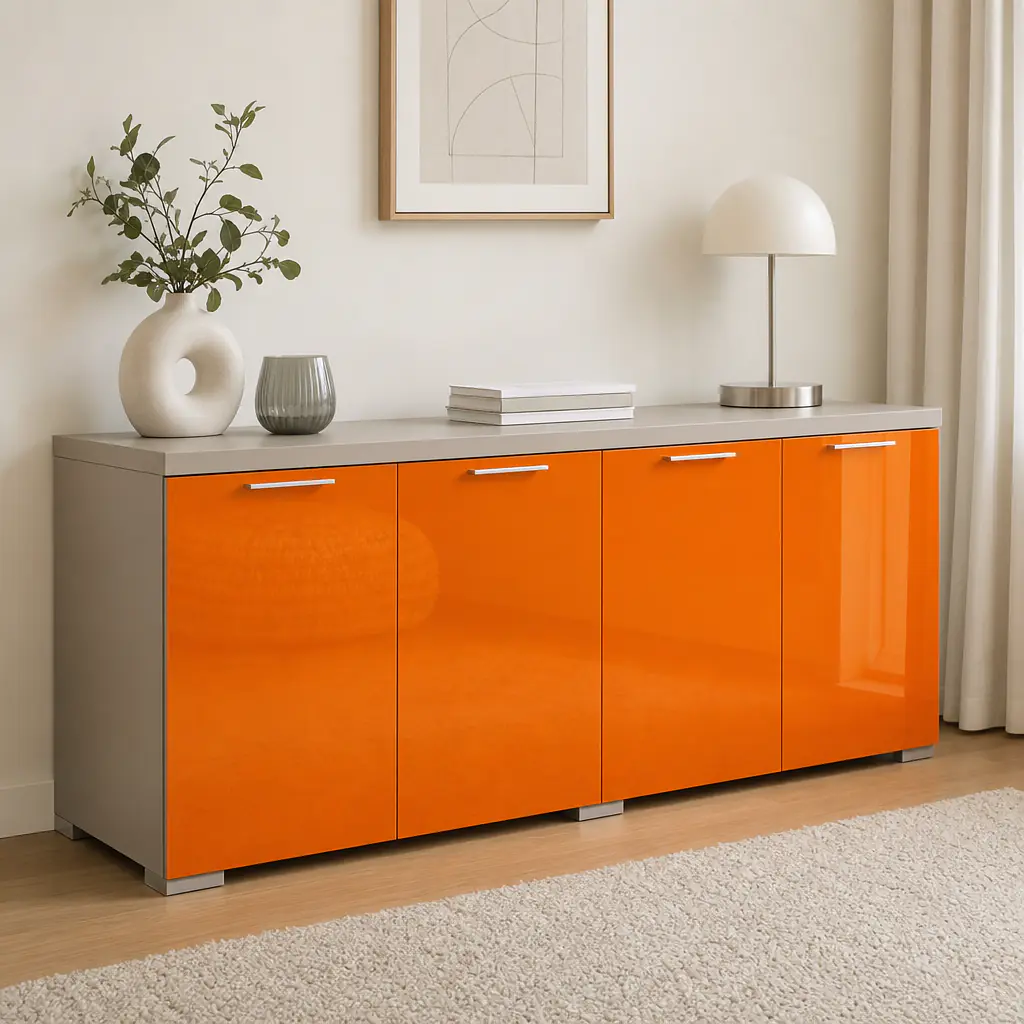
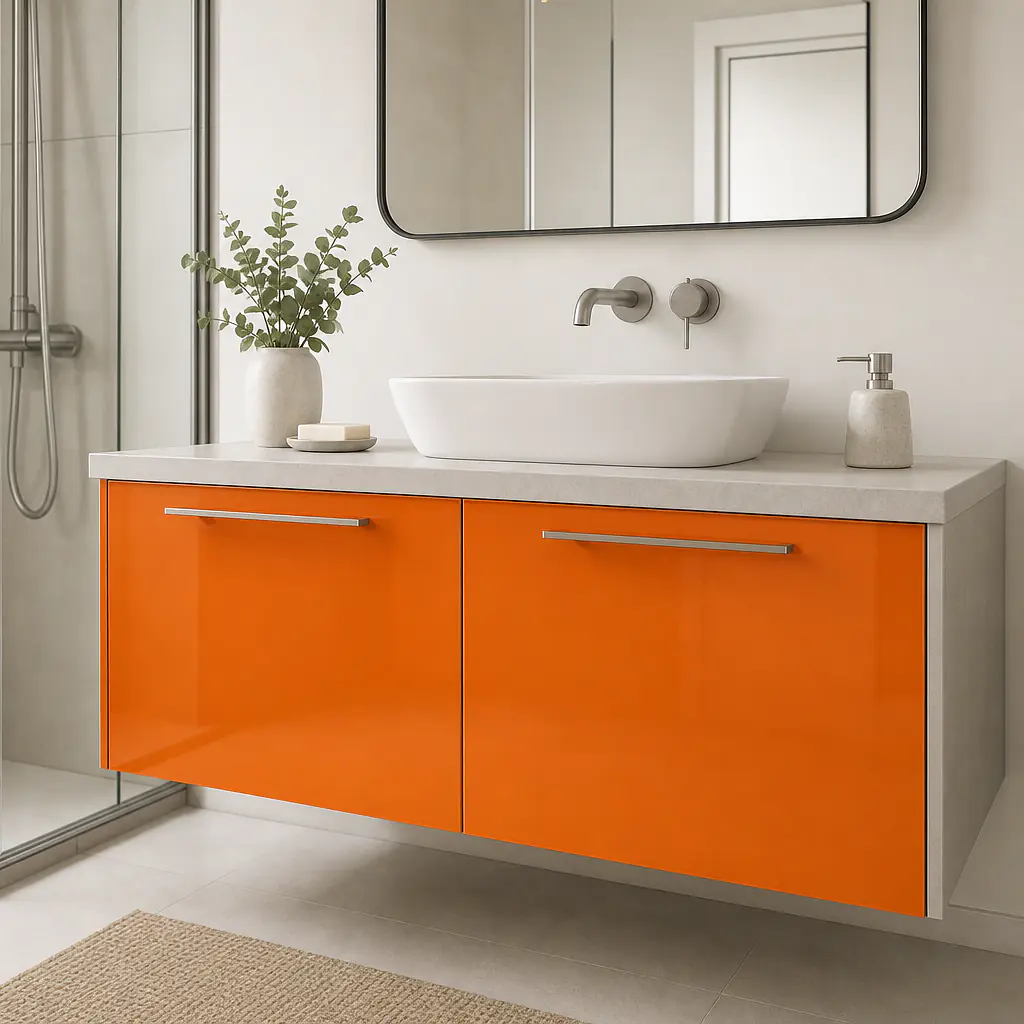
With this light orange glossy furniture film, you can give furniture and home accessories a fresh, vibrant accent. The self-adhesive furniture film is especially suitable for smooth indoor surfaces and offers a striking color effect that makes rooms appear warmer and more inviting.
Universal Design PossibilitiesWhether on cabinet fronts, shelf edges, or doors — the adhesive film for furniture is ideal for quickly giving small blemishes or outdated surfaces a new look. The glossy finish provides vivid color depth and pleasantly reflects light.
Available Widths and Lengths
The film is available in three widths: 63 cm, 100 cm, and 126 cm. You can choose from several available running meter increments: 1 Lfm, 2 Lfm, 3 Lfm, 4 Lfm, 5 Lfm, 10 Lfm, 15 Lfm, 20 Lfm, 25 Lfm, 30 Lfm, 35 Lfm, 40 Lfm, 45 Lfm, and 50 Lfm.
Technical NotesThe film consists of a partially polymer PVC surface with a material thickness of approx. 0.07 mm (excluding liner and adhesive). The adhesive is permanent; application should be done at a minimum temperature of 10 °C.
What This Film Matches
The light orange color complements modern, Scandinavian, and retro-inspired interior styles alike. Use the film to create accents, contrast drawers, or visually refresh entire furniture surfaces. For best results, work on clean, smooth surfaces and cut the film to fit.
The description contains usage tips and technical data but does not replace individual advice for special substrates or applications. Please observe the recommended processing temperatures before applying the film to furniture.
| Durability |
Durability :with vertical outdoor exposure, normal Central European climate
|
|---|---|
| Shelf Life |
2 Year(s) | in original packaging, at 20 °C and 50% relative humidity |
| Maximum shrinkage |
Maximum shrinkage along 0.4 mm
|
| Elongation at break |
Minimum elongation at break along 130 %
|
| Tensile strength |
Minimum tensile strength along: 19 N/mm²
|
| Seawater resistance |
no change | after 100h/35°C | adhered to aluminum, DIN EN ISO 9227 |
| Temperature resistance |
Minimum temperature: -40 °C
|
| Adhesive power |
18 N/25 mm | after 24 h, on stainless steel | Average value, FINAT TM 1 |
| Adhesive |
Permanent |
| Recommended printing procedure |
Digital thermal transfer printing |
| Application temperature |
Minimum temperature 10 °C |
| Front material |
Thickness front material: 0.07 mm
|
| Thickness |
0.07 mm | Average value, without protective liner and adhesive |
| Format |
Roll |
| Standard width |
1260 mm
|
| Standard length |
50 m |
Frequent Questions on Furniture Film Light Orange Glossy
What furniture surfaces is furniture film suitable for?
Suitability depends on the specific product and the existing surface. Compare the material, coating and condition of the surface with the product specifications.
How do I measure a piece of furniture for furniture film?
Measure the fronts, sides, panels and visible edges individually. Note any cut-outs, handle holes and the desired direction of the design, rather than using only the overall dimensions of the furniture.
How much furniture film should I order?
Add up the dimensions of all the intended sections and take into account the edges required for the product and project, as well as a reasonable cutting allowance. Check the format and scope of delivery on the product page.
How do I plan the decor direction across multiple fronts?
Before cutting, define a direction and number the doors and drawers. This makes it possible to continue wood, stone or linear looks consistently across adjacent surfaces.
Do I need to remove doors and handles before applying the film?
That depends on the furniture and the project. Removable parts often make it easier to measure and work on edges; follow the assembly instructions for the furniture and the product.
How do I prepare a furniture surface?
The surface should be suitable according to the product specifications, clean, dry, and free of any residue that could interfere. Always test sensitive or unclear surfaces first in an inconspicuous area.
Can I simply cover damaged furniture with adhesive film?
Film does not automatically compensate for structural damage. Loose coatings, raised areas or deep damage may remain visible and must be professionally assessed beforehand.
Where can I find the installation instructions for my furniture film?
The binding instructions are provided with the respective product. The pages on measuring furniture, choosing the right film and planning the installation also provide helpful information.
Planning Furniture Film: Consider Surface, Pattern Direction and Edges Together
A successful furniture film project begins before cutting. Mentally divide the furniture into fronts, sides, panels, edges and cut-outs. Measure each part individually and note which surfaces will remain visible. Then check the product information for the existing substrate.
For wood, stone and linear patterns, establish a consistent pattern direction. Number doors and drawers so that the cut pieces and pattern flow can be clearly assigned later. Include visible edges, handle holes and transitions in the quantity calculation from the outset.
- measure each front, side and panel separately
- establish the pattern direction before cutting and installation
- prepare the substrate clean, dry and in accordance with the product information
- take edges, cut-outs and allowances into account during planning