
Plan a Gallery Wall: Sizes, Spacing & Arrangement
Plan your Gallery Wall as a cohesive composition. Choose motifs, formats and spacing deliberately, and test the arrangement on the floor or with templates on the wall first.
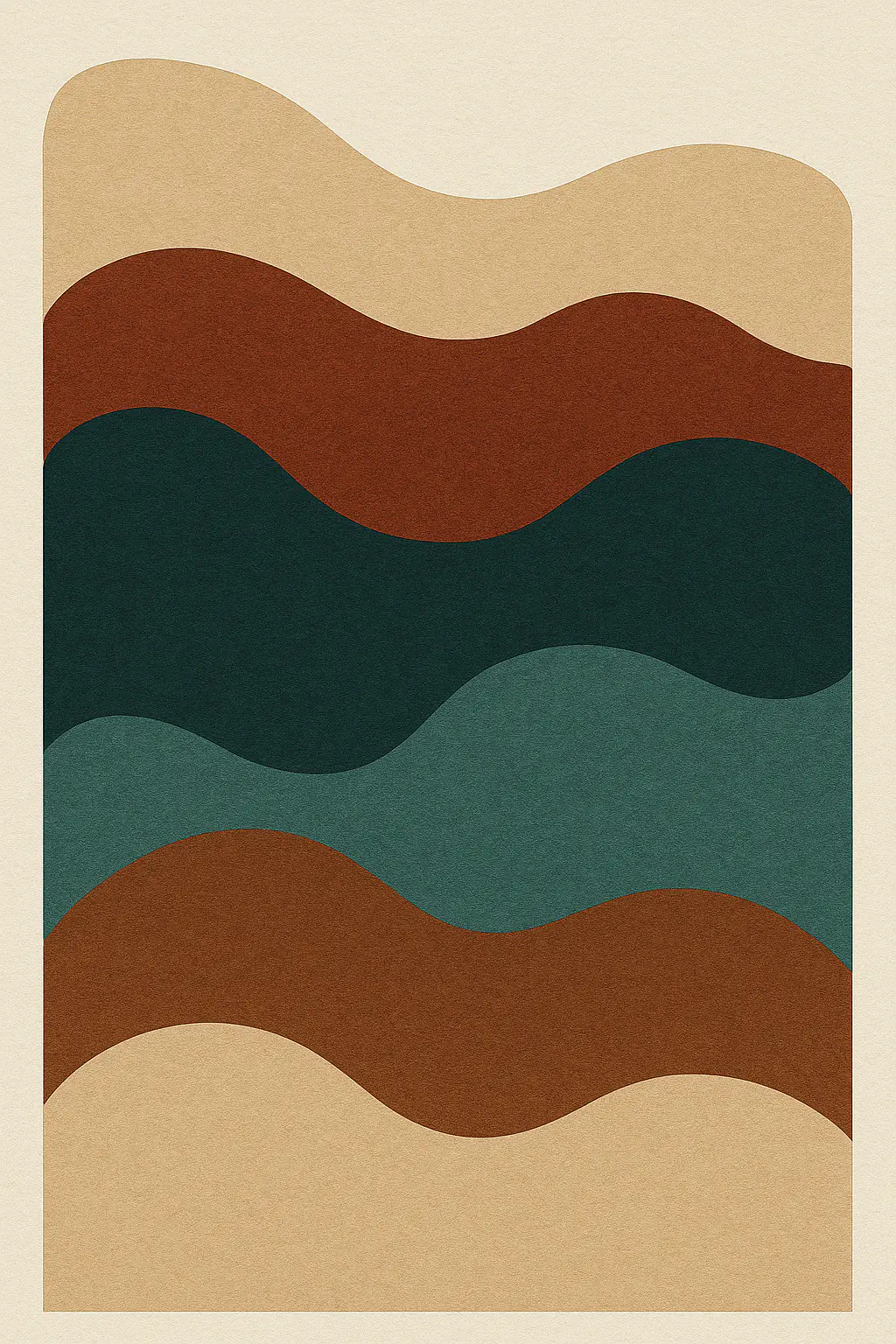
How do you plan a harmonious Gallery Wall?
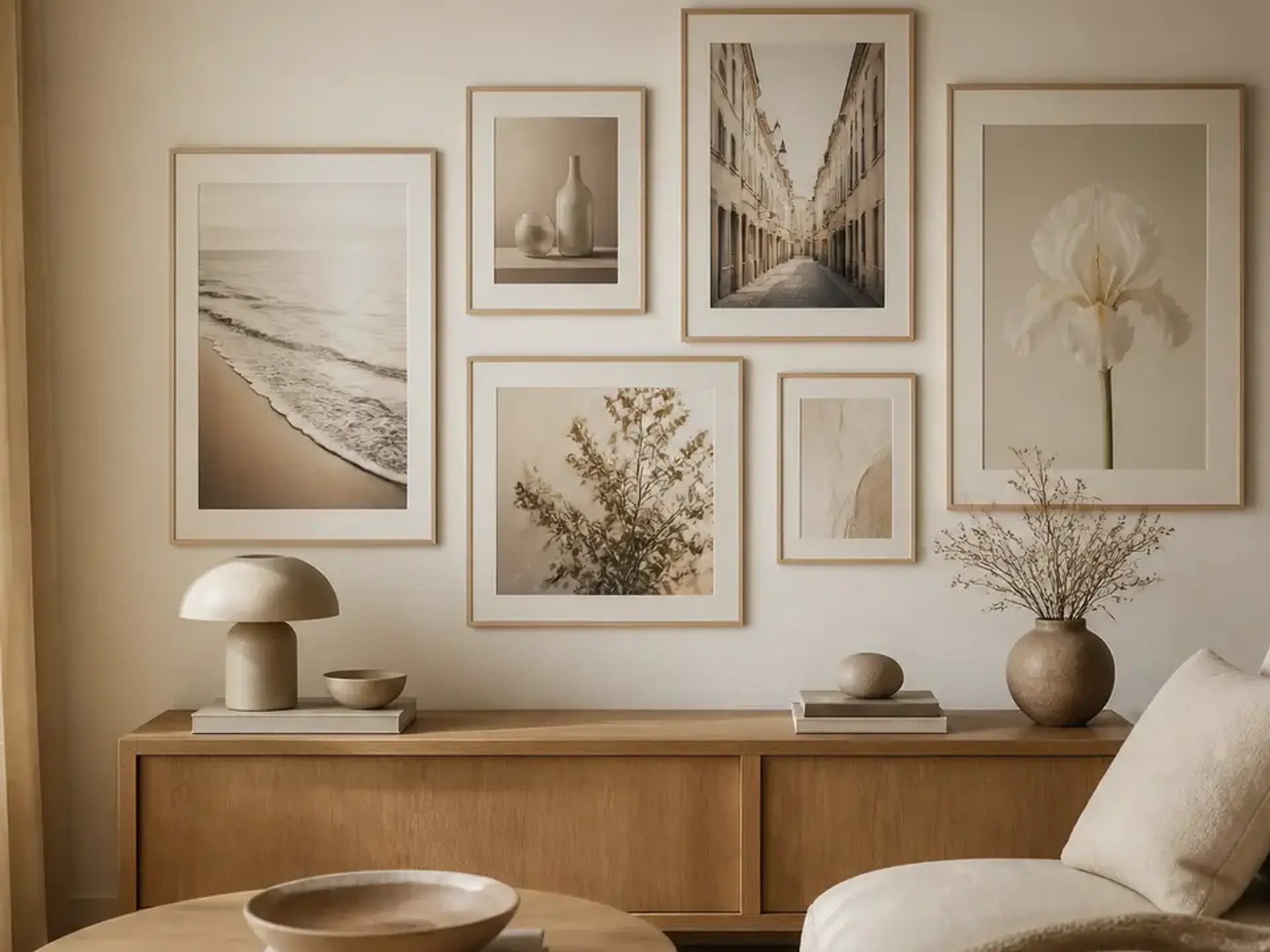
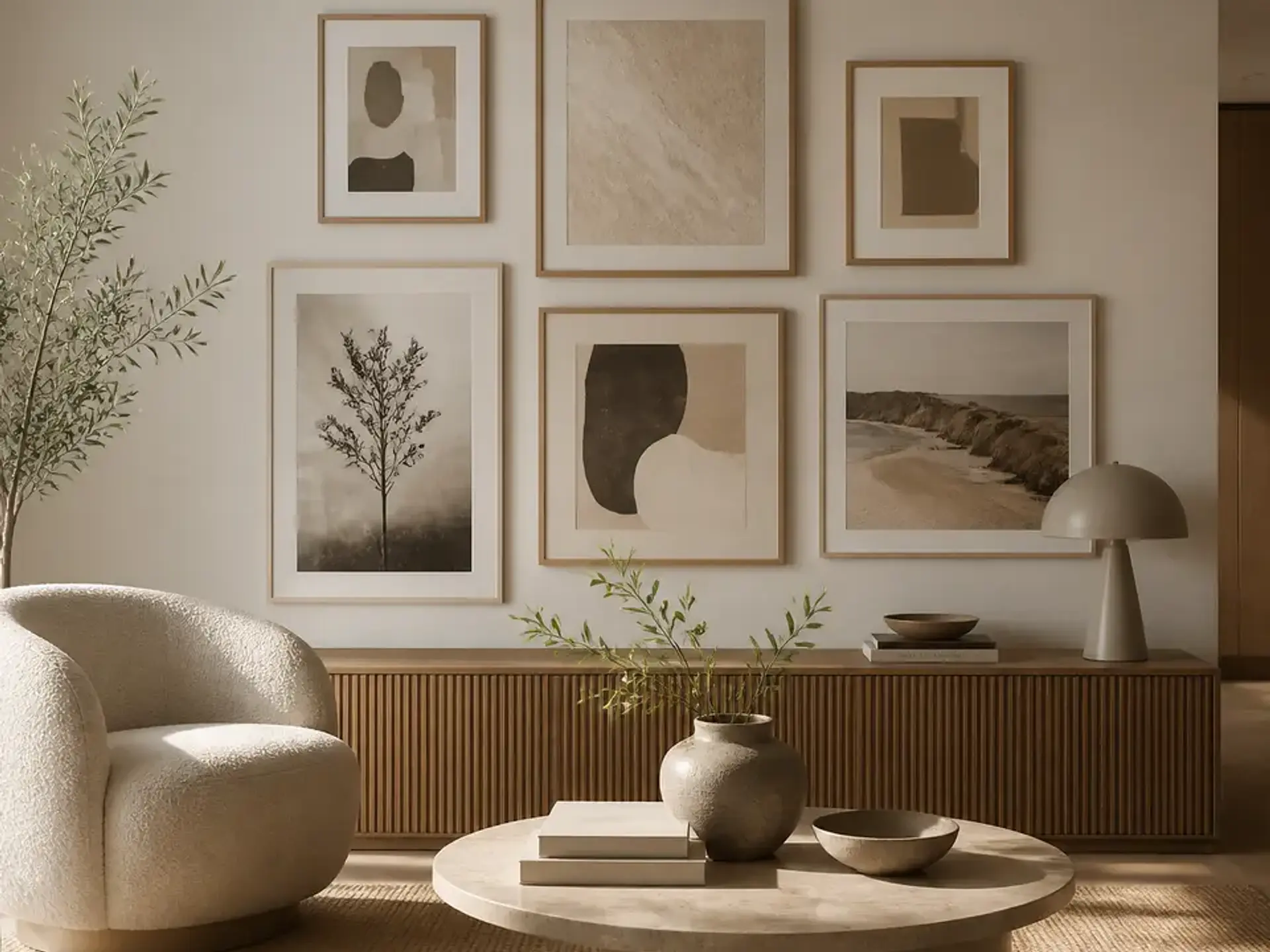
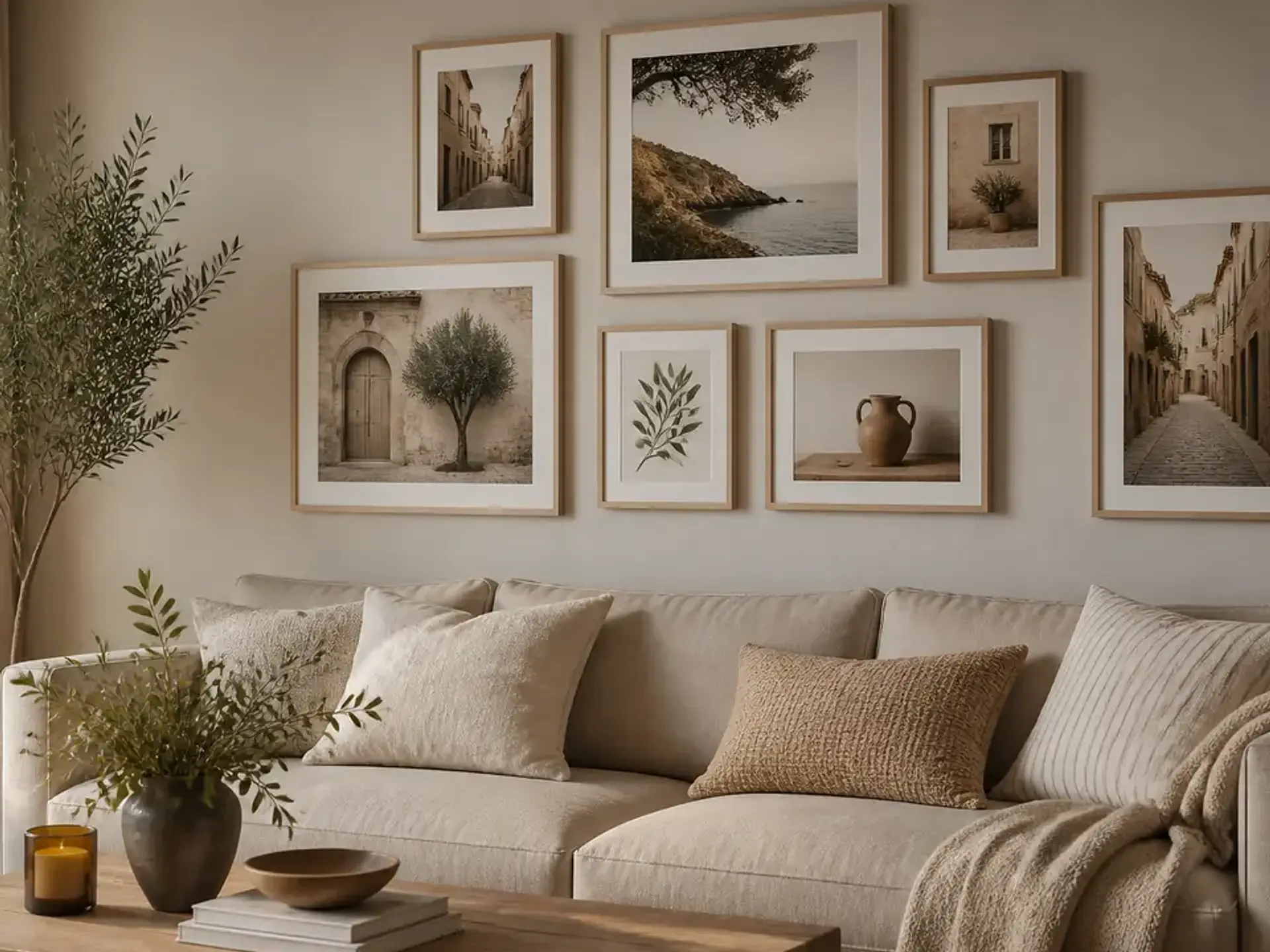
A harmonious Gallery Wall connects different pictures through at least one recurring principle: color palette, visual language, frames, format or spacing. First, define the available wall space and a visual focal point. Then choose the main motif, accompanying motifs and the basic arrangement.
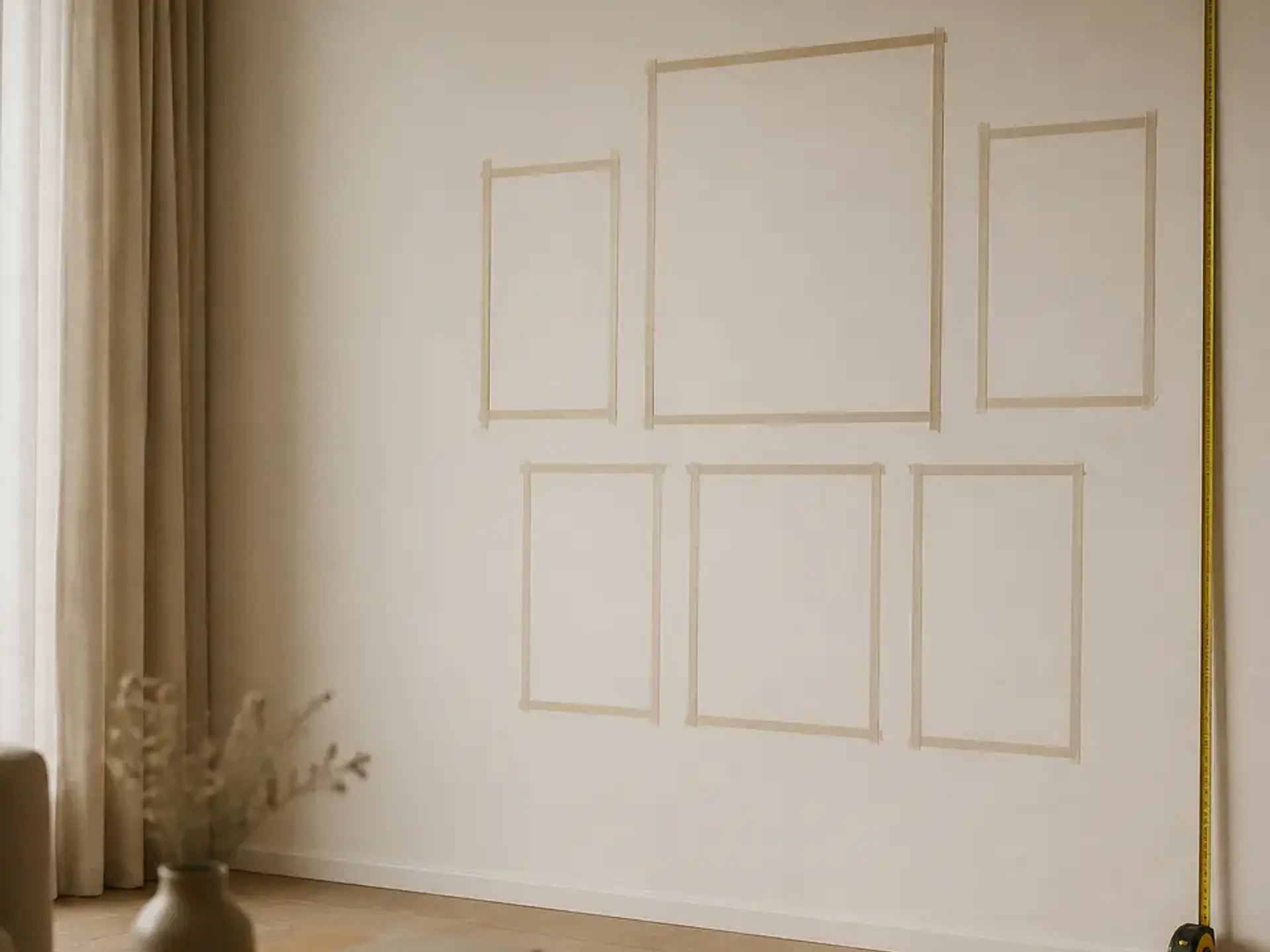
Test the composition before setting the fixing points. Lay the pictures out on the floor or work with full-size paper templates. This allows you to change the order, balance and gaps without unnecessary corrections.
Which Gallery Wall arrangement suits your room?
More than three layouts make sense. That’s why the selection appears as a separate card grid below the text hero.
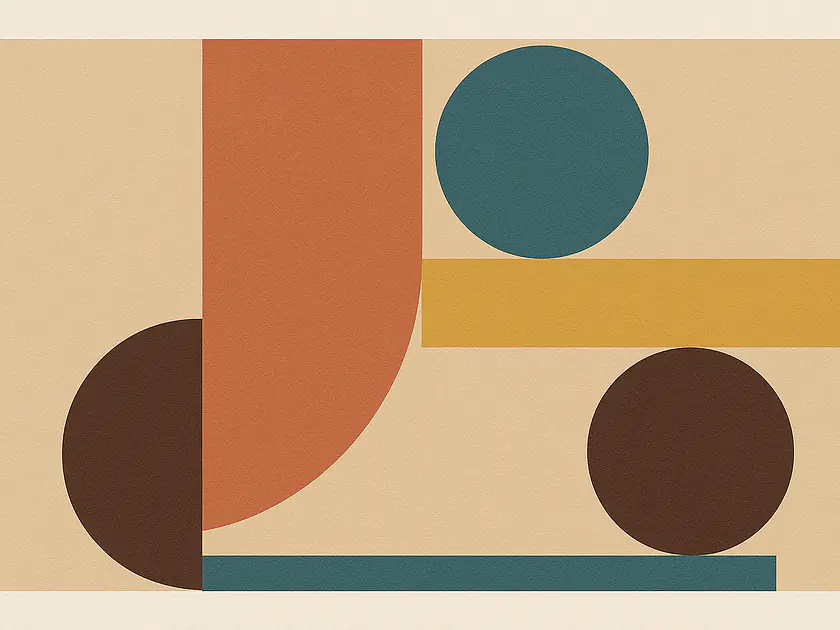
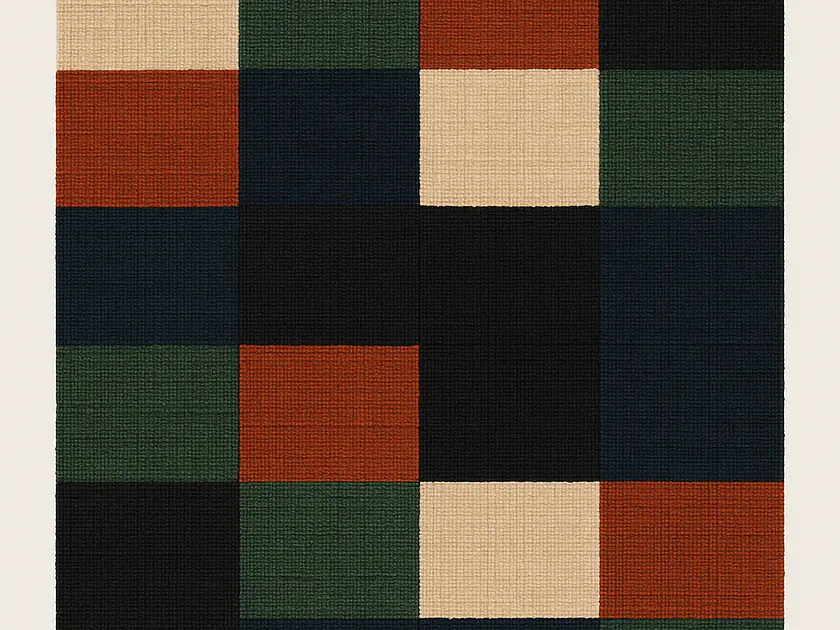

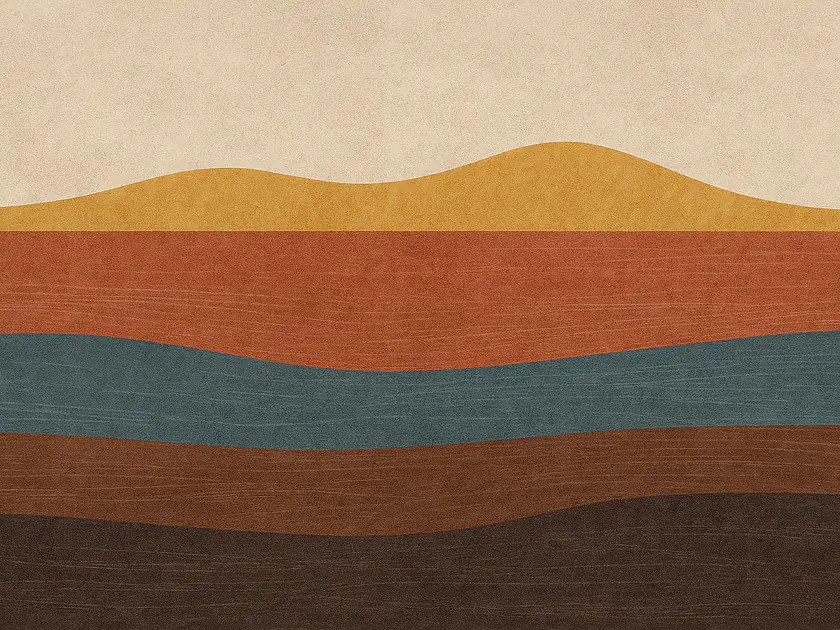
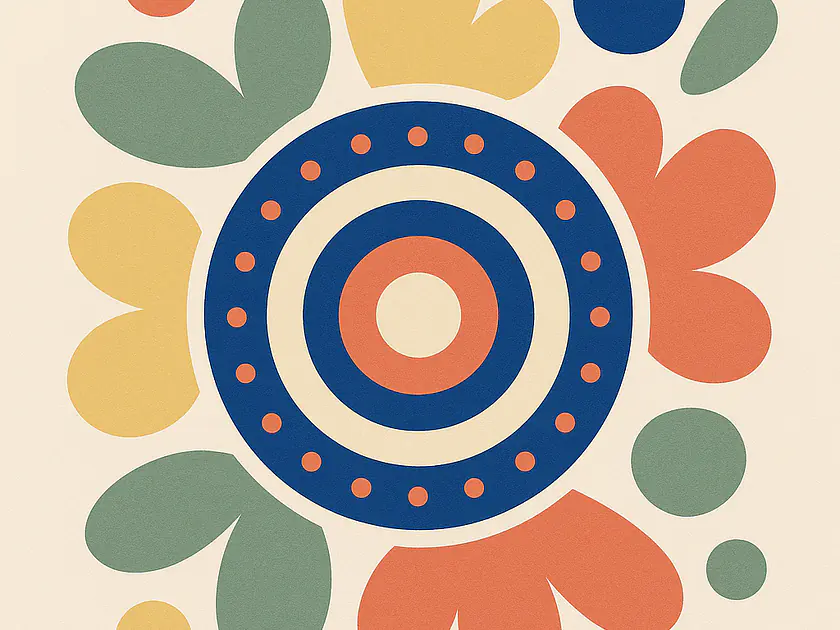
Start with a main motif
The largest or most contrasting picture gives the composition structure. Don’t automatically place it geometrically in the center; instead, position it where it makes meaningful use of the room’s sightline. Smaller motifs can then be grouped around it.
Pay attention to visual weight when making your selection: A small dark motif can be just as prominent as a significantly larger light picture. Balance is created through impact, not just centimeters.
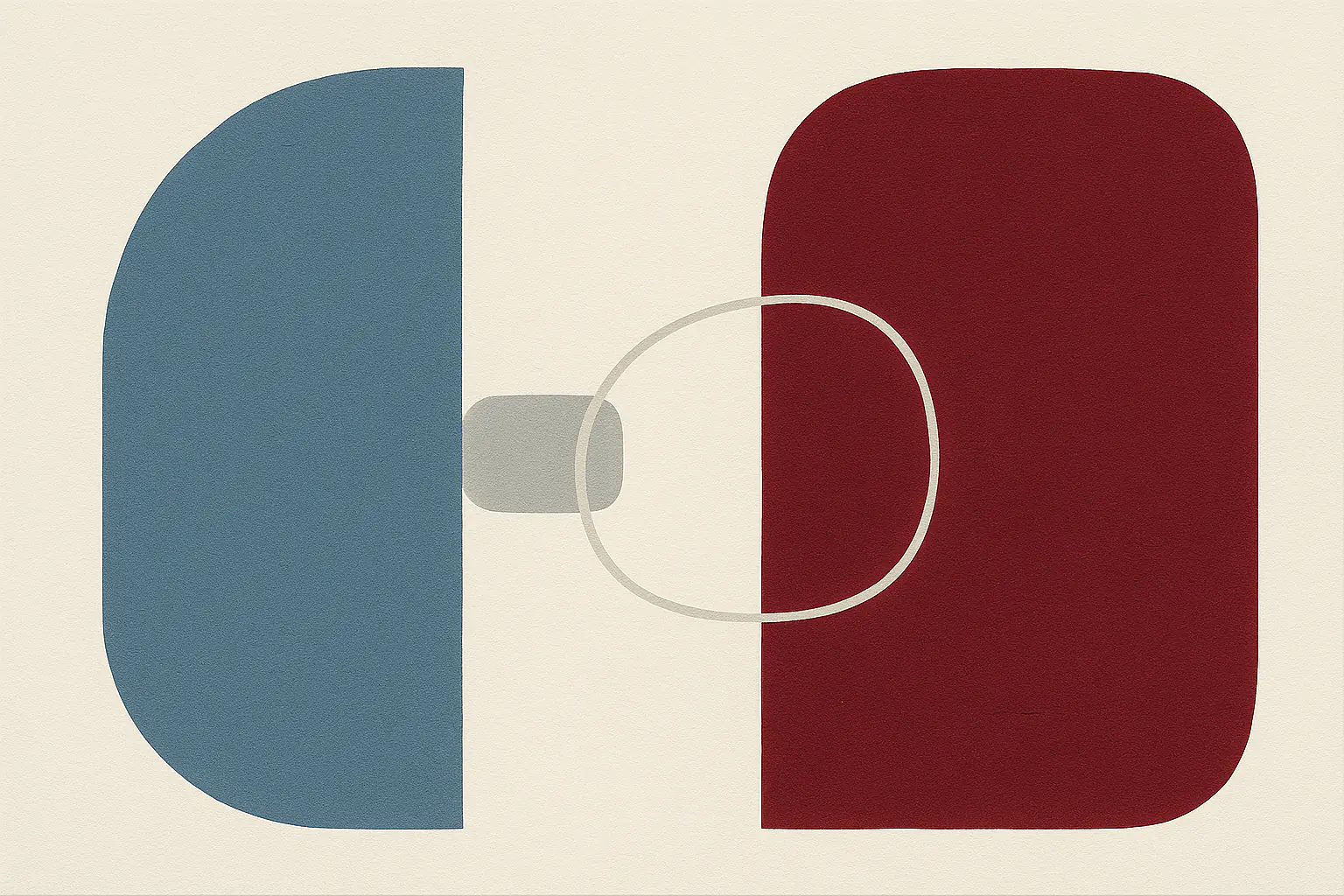
Check spacing and outer contour
Recurring gaps make even a loose salon-style arrangement easy to follow. Set a guideline and vary it only deliberately. Also check the outer contour of the entire group: It should suit the width of the furniture and the available wall space.
Photograph different trial arrangements. In a photo, crooked lines, gaps that are too large or an unbalanced focal point often stand out faster than when looking directly at the wall.
Plan a Gallery Wall in Five Steps
The following steps structure the process from the initial assessment to the next sensible goal.
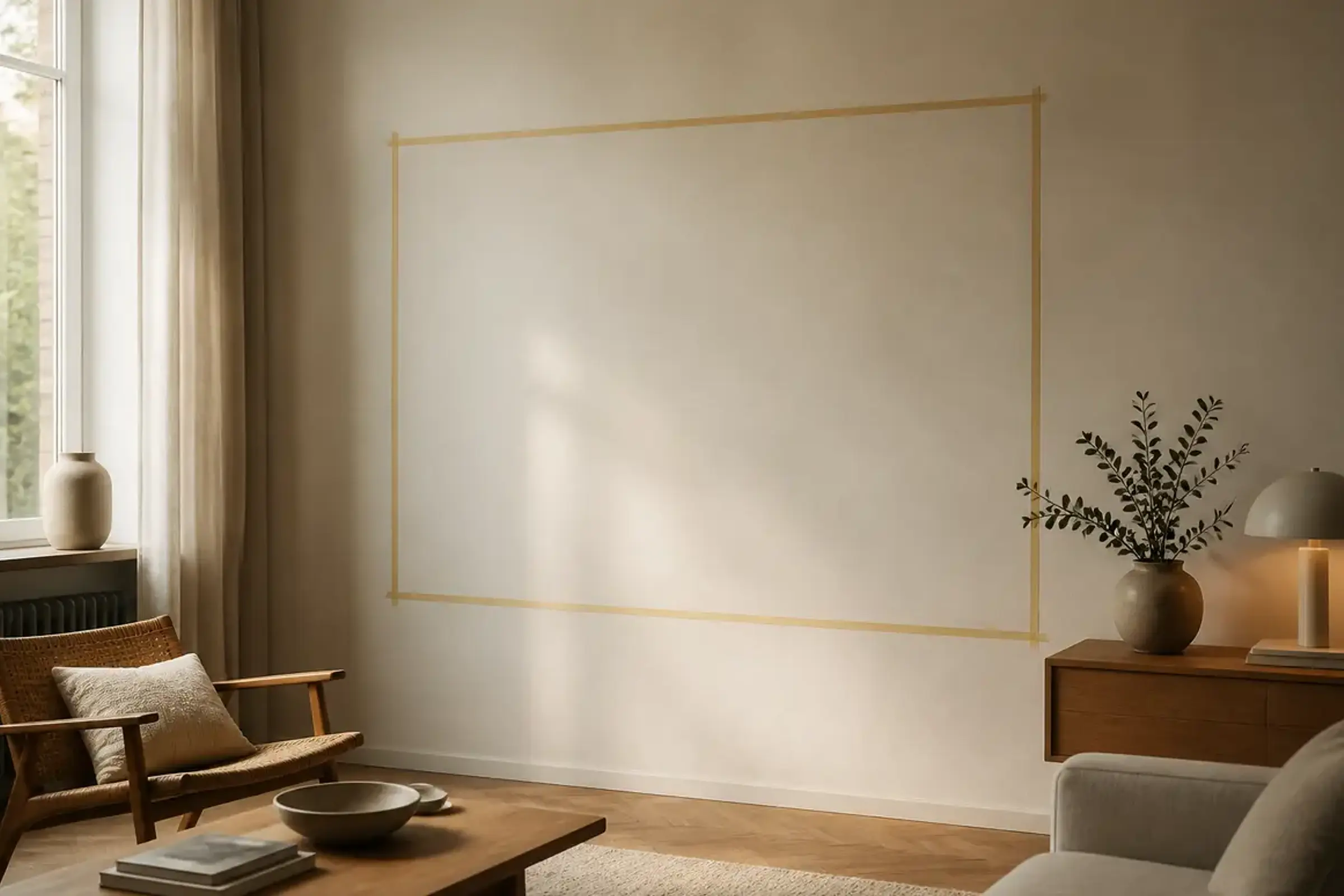
Step 1
Define the Space
Step 2
Curate the Motifs
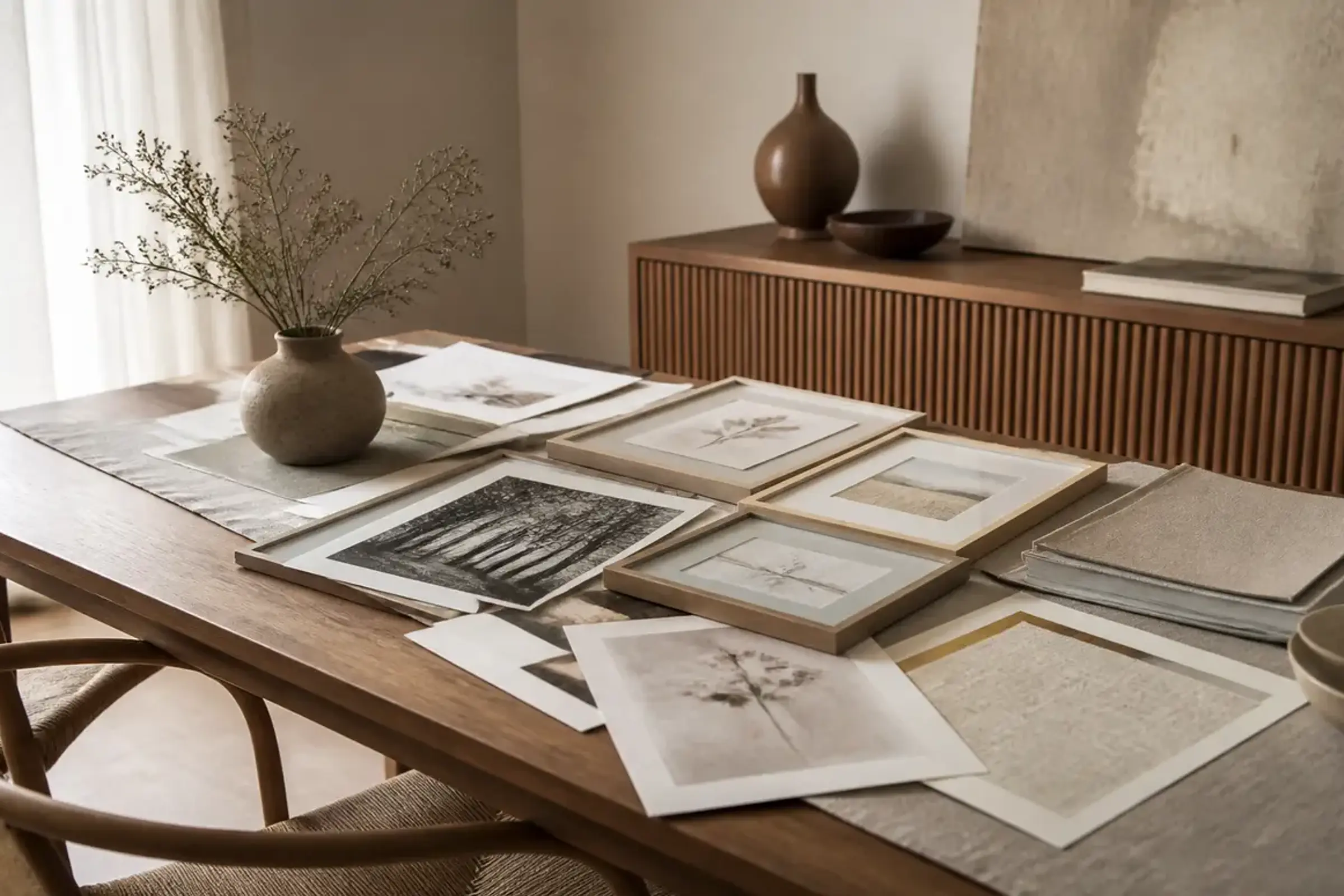
Step 3
Choose a Layout
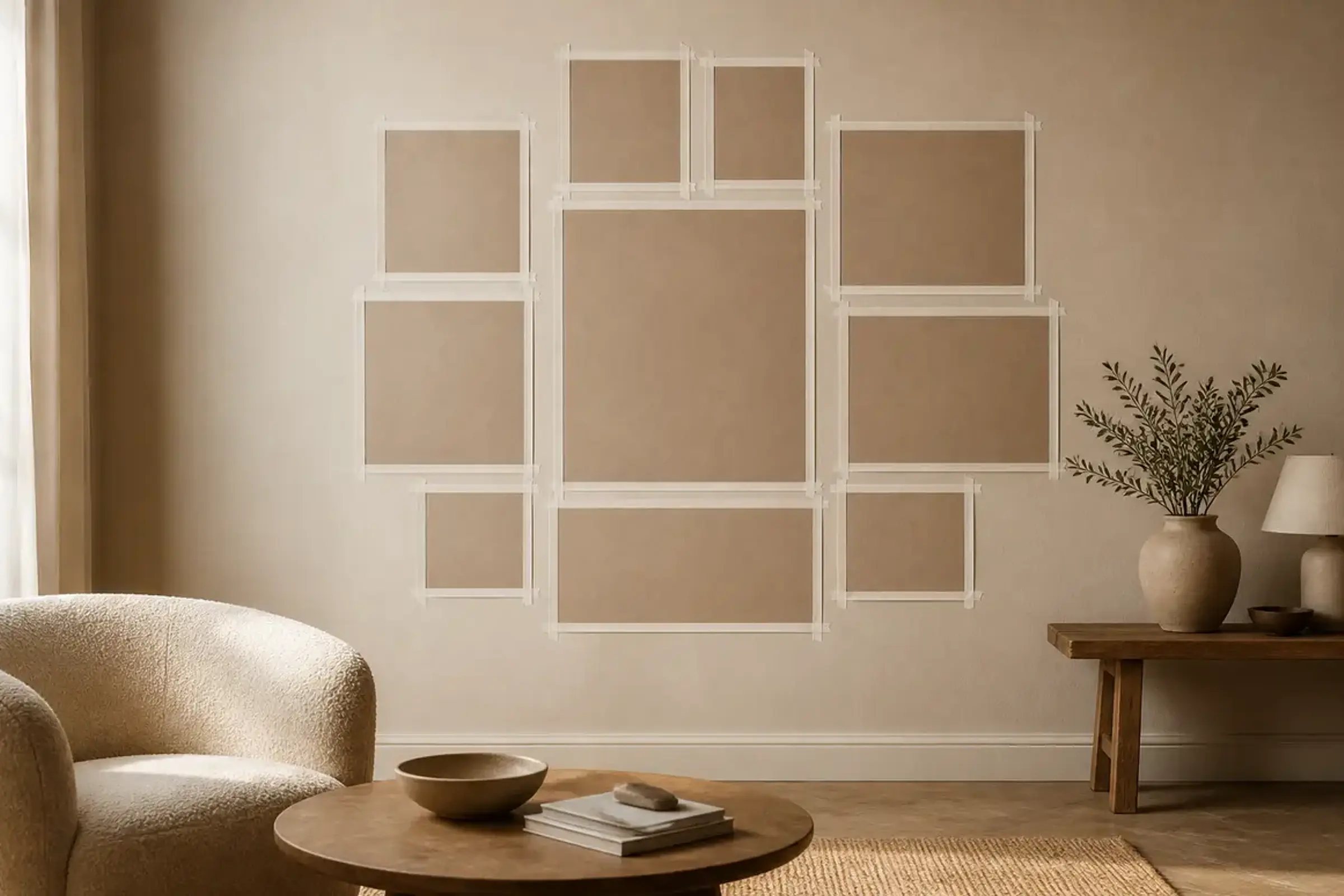
Step 4
Arrange the Picture Wall as a Trial
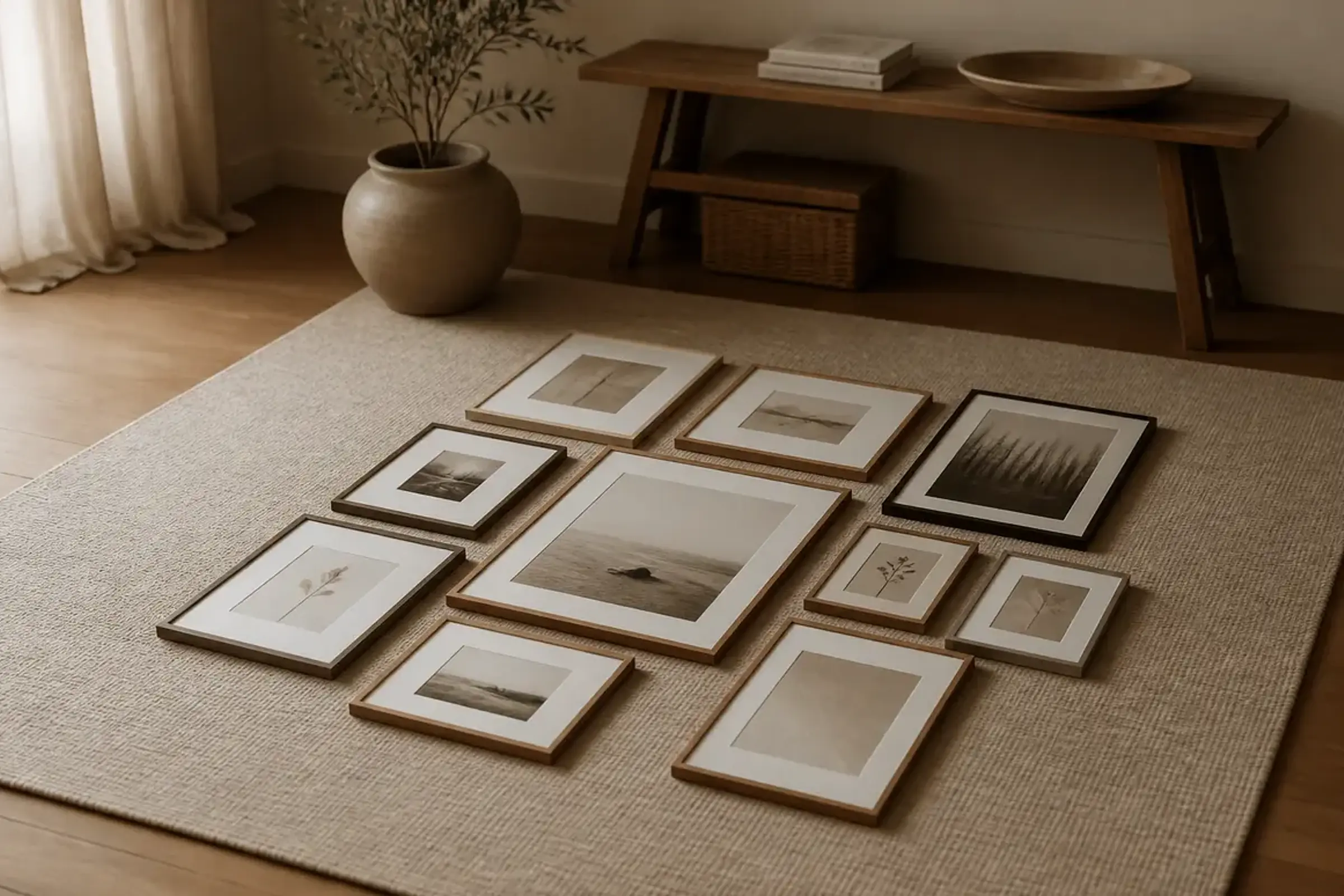
Step 5
Align the Final Arrangement
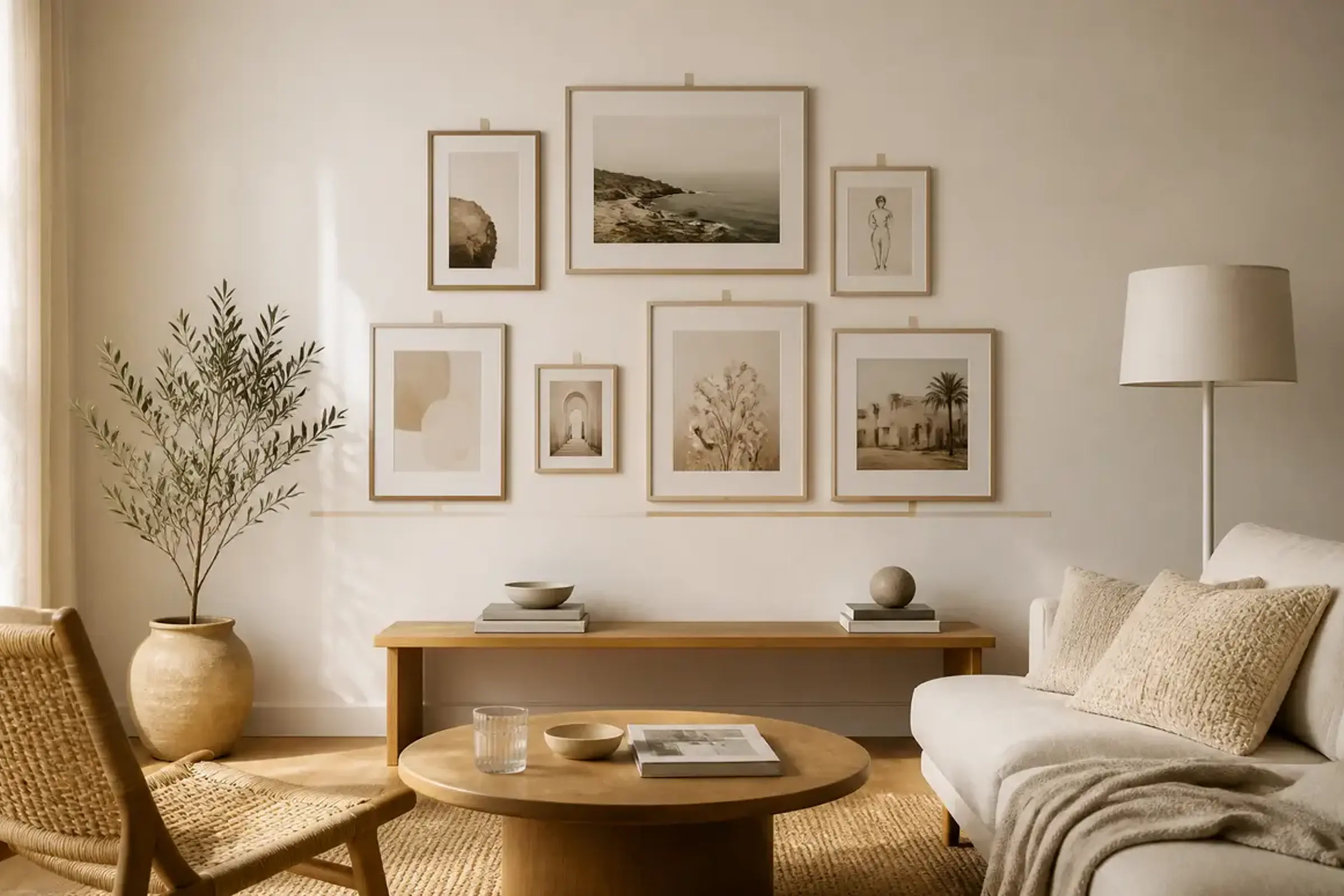
How do you combine different picture formats?
Combine portrait, landscape and square formats in small groups rather than randomly. Two similar formats can create a counterbalance to a larger main motif. Repeating frame colors or mounts bring harmony to different motif worlds.
If furniture, lighting or textiles already feature strong patterns, the picture wall often benefits from a limited color palette. In a calm room, on the other hand, you can use high-contrast motifs or varying formats more prominently.
Also plan for future expansion. An open outer edge or a deliberate grid makes it easier to add more motifs later without having to rebuild the entire composition.
Suitable Next Steps
Explore unanswered questions in more depth or go directly to the relevant product category, guide or service page.
Frequent Questions
Which picture should be chosen first for a gallery wall?
Start with a main image or a clear unifying theme. You can then add smaller complementary images more purposefully.
How do I test the arrangement before hanging it?
Lay the pictures out on the floor or temporarily attach life-size paper templates to the wall.
Do all frames have to be the same?
No. Matching frames create a sense of calm, while different frames can work if color, material, or the subject matter visibly ties the group together.
Can a gallery wall be expanded later?
Yes. To allow for this, plan an open outer edge or a grid that can accommodate additional formats.
Home decor benefits
Easy to apply
A strong result for quick furniture, wall, and decor updates.
Premium quality
Made in the EU with durable materials for everyday interiors.
For furniture and walls
Designed for cabinets, doors, walls, surfaces, and more.
Lasting look
Refresh rooms instead of replacing pieces, with long-lasting style.
Room inspiration
Soft colors and textures for every room concept.