
More information about Furniture film dark marble with fine white veining
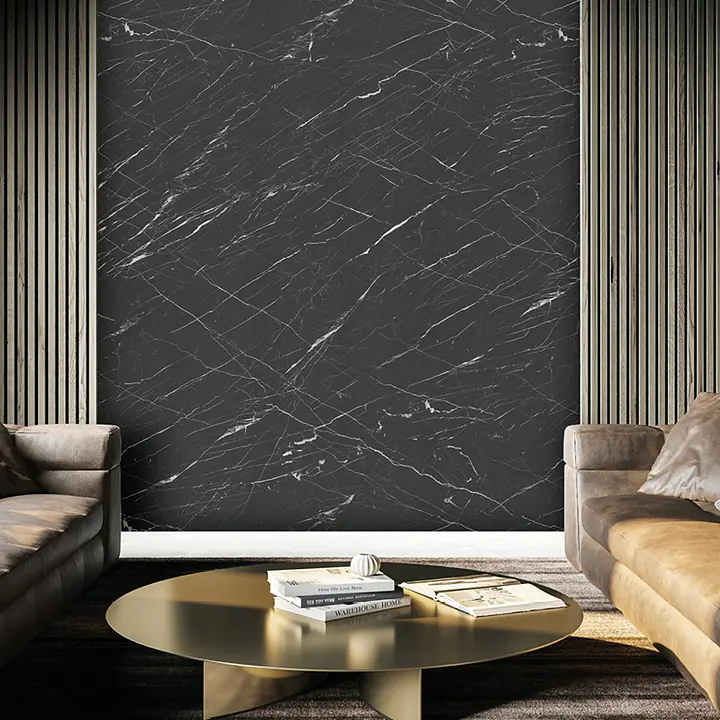
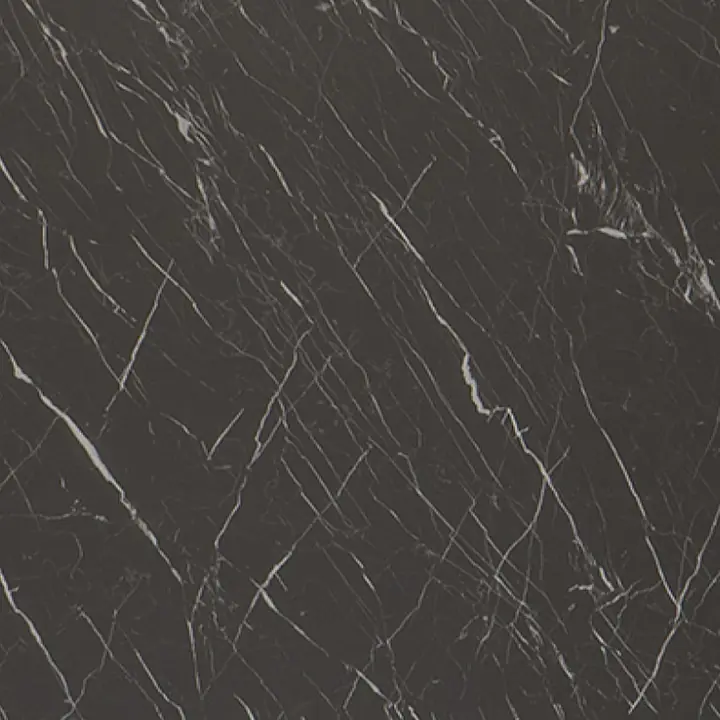
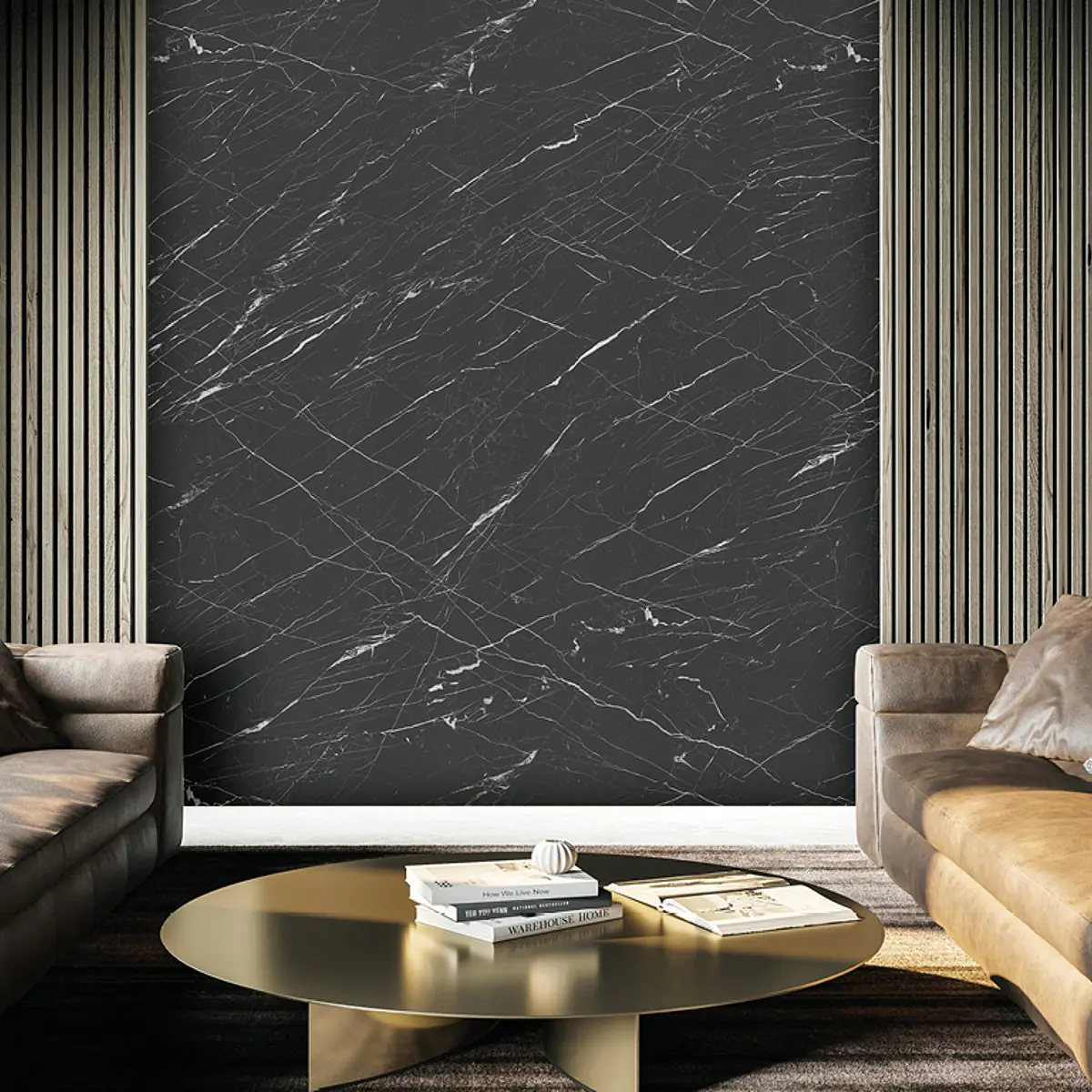
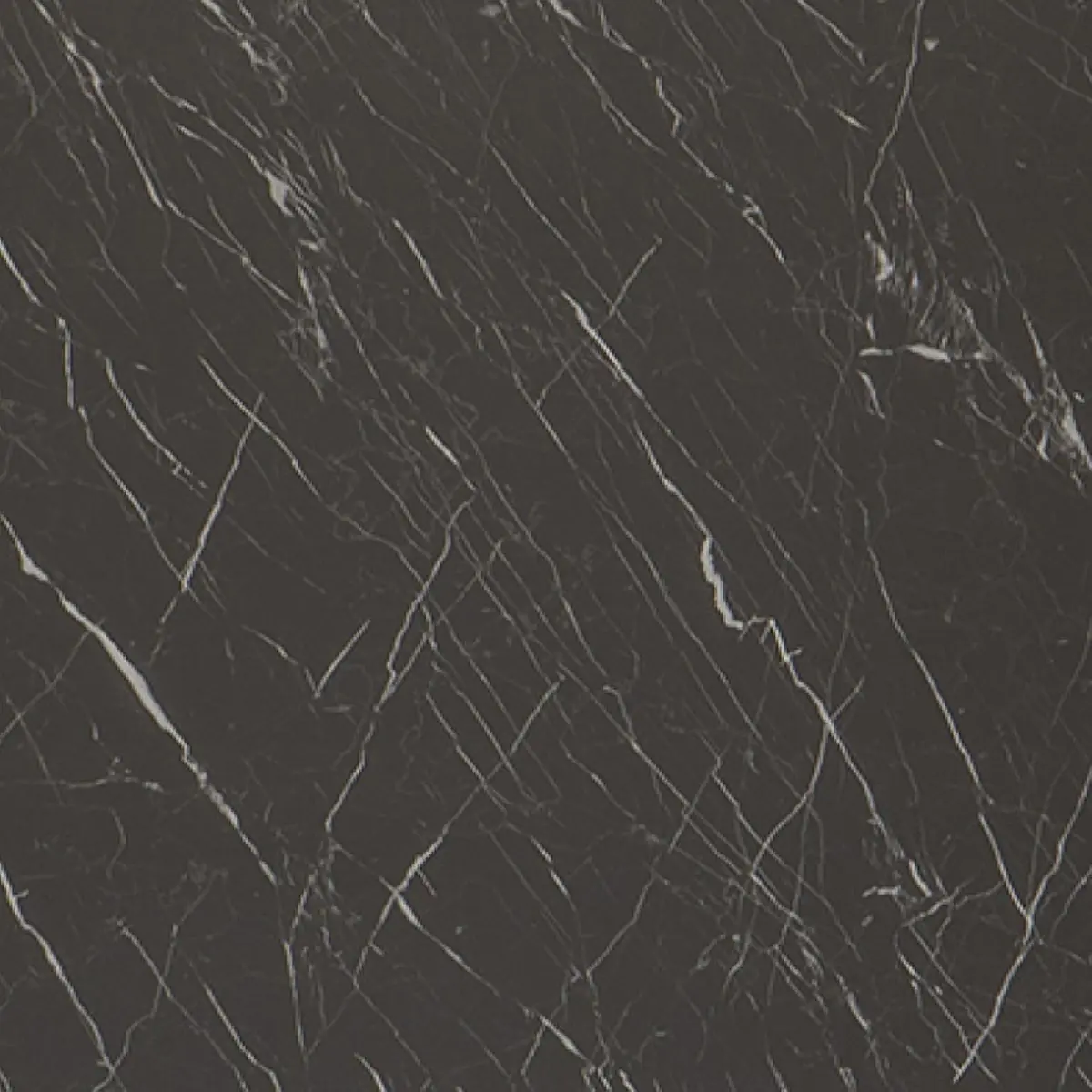
This textured furniture film features a deep dark marble look with delicately branched white veining. The surface appears matte and natural, with veins running diagonally across the decor in varying thicknesses, creating an elegant, dynamic grain. The high-contrast pattern is especially well-suited to modern living concepts, adding subtle, sophisticated accents.
As a self-adhesive furniture film, this decor is particularly suitable for designing smooth furniture surfaces indoors. Use the film to temporarily and affordably upgrade kitchen fronts, cabinet doors, tabletops, or wall panels. The dark marble effect harmonizes beautifully with warm wood tones and metallic details.
Design and Application
The combination of a dark base tone and fine white veins creates a timeless, luxurious effect. This decor is ideal for areas where you want to achieve an elegant look without extensive work. Use the film as an accent surface over an entire cabinet front or as inlays on furniture edges.
Formats and Application Notes
The film is available in a width of 122 cm. Lengths are offered in graduated running meters: 1 rm, 2 rm, 3 rm, 4 rm, 5 rm, 10 rm, 15 rm, 20 rm, 25 rm, 30 rm, 35 rm, 40 rm, 45 rm, and 50 rm. When applying, allow enough overlap to align the marble pattern and check the substrate for smoothness and load-bearing capacity.
This decor complements Scandinavian, industrial, and modern interior concepts equally well. Combine it with light textiles or metallic handles to highlight the veining. Furniture film, adhesive film for furniture, and furniture wrapping are effective ways to quickly and individually style your spaces.
Frequent Questions on Furniture film dark marble with fine white veining
What furniture surfaces is furniture film suitable for?
Suitability depends on the specific product and the existing surface. Compare the material, coating and condition of the surface with the product specifications.
How do I measure a piece of furniture for furniture film?
Measure the fronts, sides, panels and visible edges individually. Note any cut-outs, handle holes and the desired direction of the design, rather than using only the overall dimensions of the furniture.
How much furniture film should I order?
Add up the dimensions of all the intended sections and take into account the edges required for the product and project, as well as a reasonable cutting allowance. Check the format and scope of delivery on the product page.
How do I plan the decor direction across multiple fronts?
Before cutting, define a direction and number the doors and drawers. This makes it possible to continue wood, stone or linear looks consistently across adjacent surfaces.
Do I need to remove doors and handles before applying the film?
That depends on the furniture and the project. Removable parts often make it easier to measure and work on edges; follow the assembly instructions for the furniture and the product.
How do I prepare a furniture surface?
The surface should be suitable according to the product specifications, clean, dry, and free of any residue that could interfere. Always test sensitive or unclear surfaces first in an inconspicuous area.
Can I simply cover damaged furniture with adhesive film?
Film does not automatically compensate for structural damage. Loose coatings, raised areas or deep damage may remain visible and must be professionally assessed beforehand.
Where can I find the installation instructions for my furniture film?
The binding instructions are provided with the respective product. The pages on measuring furniture, choosing the right film and planning the installation also provide helpful information.
Planning Furniture Film: Consider Surface, Pattern Direction and Edges Together
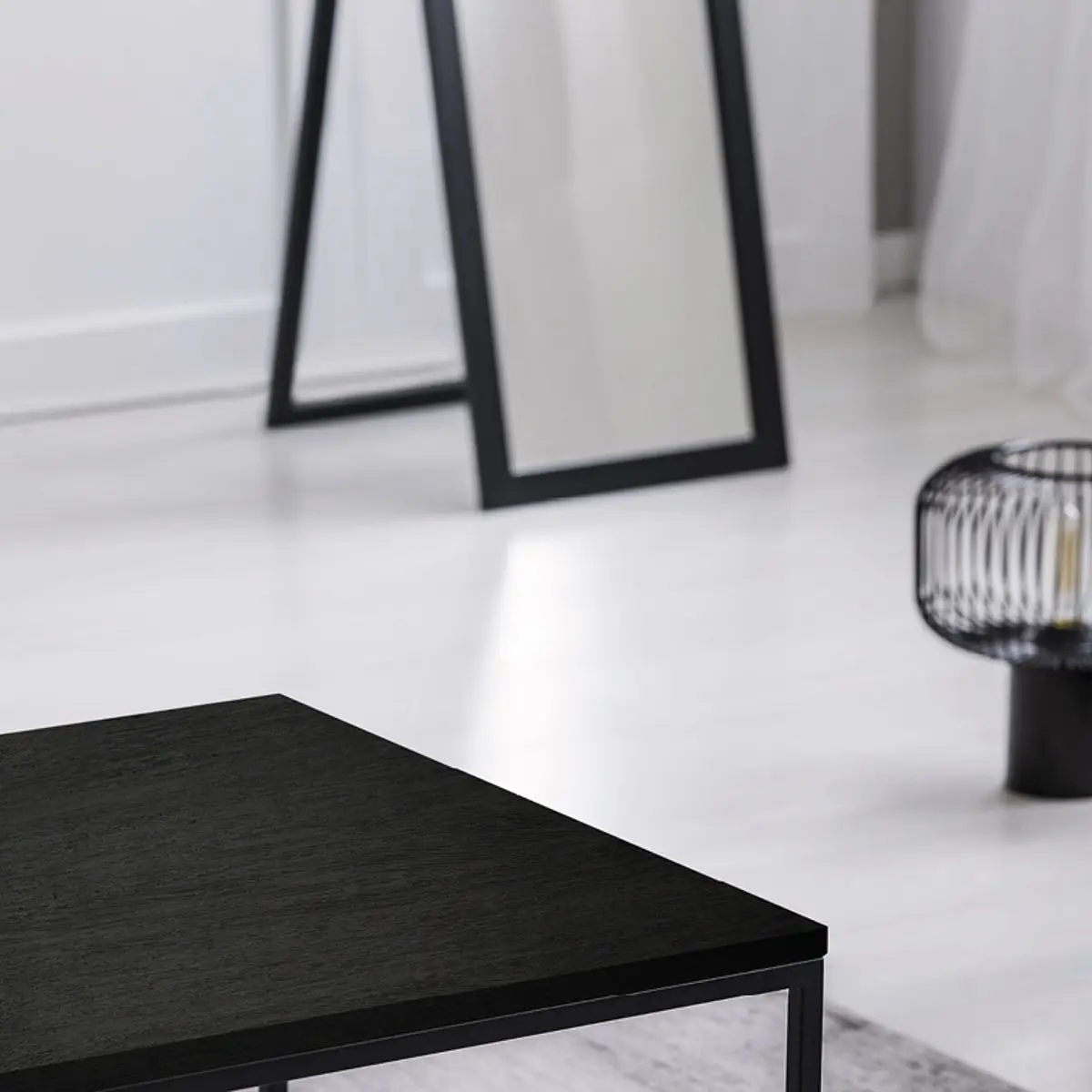
A successful furniture film project begins before cutting. Mentally divide the furniture into fronts, sides, panels, edges and cut-outs. Measure each part individually and note which surfaces will remain visible. Then check the product information for the existing substrate.
For wood, stone and linear patterns, establish a consistent pattern direction. Number doors and drawers so that the cut pieces and pattern flow can be clearly assigned later. Include visible edges, handle holes and transitions in the quantity calculation from the outset.
- measure each front, side and panel separately
- establish the pattern direction before cutting and installation
- prepare the substrate clean, dry and in accordance with the product information
- take edges, cut-outs and allowances into account during planning