



More information about Little Big Top Wall Decal
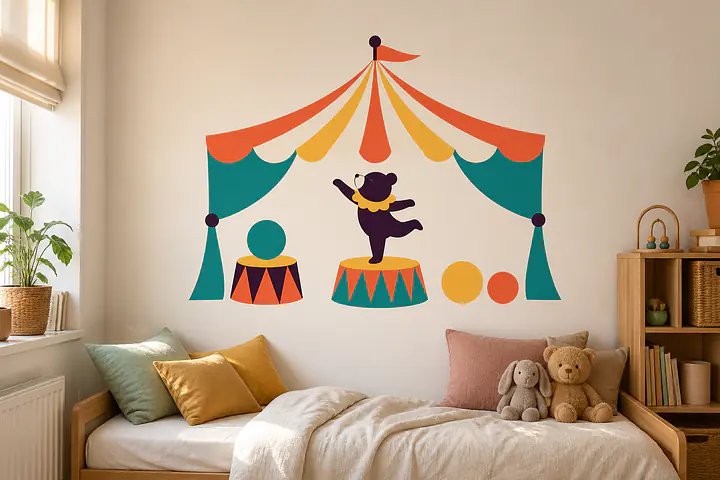
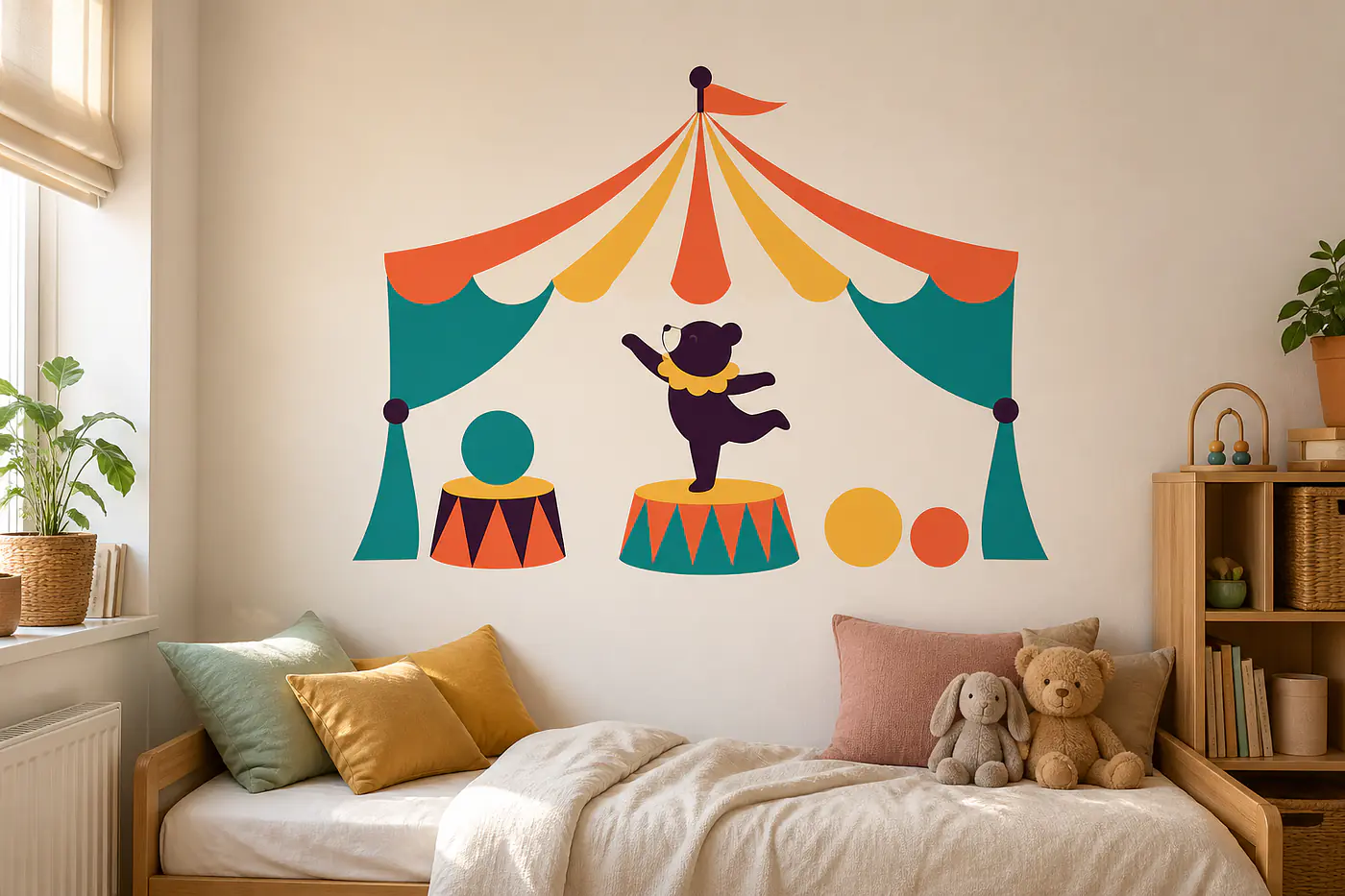
The Little Big Top wall decal features an abstract, friendly circus scene: a large striped tent roof, two pedestals, three balls, and a small, neutrally designed acrobatic bear. The composition uses clear, bold shapes and a playful, graphic look in the FunHaus style—perfect for creating a cheerful focal point in a bright children's room.
The wall decal is modular and comes as nine identical designs. It is available in three proportional installation sizes (approximate outer dimensions after installation): Small approx. 70 × 50 cm, Medium approx. 105 × 75 cm, and Large approx. 140 × 100 cm. The motif and arrangement are fixed; production sheets and the nesting of individual parts may vary.
- Modular set: nine identical motifs for flexible arrangement in the children's room.
- Clear, bold shapes ensure good legibility and a strong spatial effect even from a distance.
- Solid color design in selectable colors, matching pillows and wall tones.
Frequent Questions on Little Big Top Wall Decal
Which walls are suitable for a wall decal?
Suitability depends on the surface, coating, and product. Compare the existing surface with the information on the product page.
How do I find the right wall decal size?
Measure the actual available wall space and take furniture, doors, windows, and viewing distance into account. Mark out the planned outer contour at its original size to check the proportions.
How do I position a wall decal above a piece of furniture?
Use the center of the furniture, the wall axis or another visible reference line. Check the position from several viewing angles and allow sufficient distance from edges and light fixtures.
Can a wall decal adhere to a textured wall?
Heavy textures can affect the contact surface. The instructions for the specific product are decisive; test unclear surfaces in an inconspicuous area.
Can I apply a wall decal to a freshly painted wall?
Observe the complete drying and curing time of the wall paint used, as well as the product specifications. A wall that is dry on the surface is not necessarily fully cured.
What preparation does the wall need?
The surface should be suitable according to the product specifications, clean, dry, and free of dust or loose particles. Plan the position and alignment before removing the backing material.
Can a wall decal be removed later?
The result depends on the product, surface, wall coating, and length of use. Check the product-specific information and proceed with particular care on delicate walls.
How do I plan a wall decal in a child’s room?
Take the bed, play area, furniture height and any future rearrangements into account. Choose the design and position so that the wall décor also looks great from typical eye levels.
Assessing Wall Design in the Room: Size, Sightline and Spacing
The desired effect is created by the relationship between the design, the open wall space and the existing furniture. Measure the usable width and height, and mark the planned outer contour at its actual size. Then view the position from the room’s typical viewing directions.
Consistent spacing connects individual pictures or designs into a harmonious composition. Take doors, windows, lights and furniture into account, as they may conceal parts of the wall. For wall decals, also check whether the specific surface is suitable according to the product information.
- measure the usable wall area rather than the entire wall
- simulate the design size with an actual-size outline
- define the sightline and relationship to the furniture
- take spacing and future use of the room into account