
More information about DREAM IN VERBS – Manifesto for a Life Lived
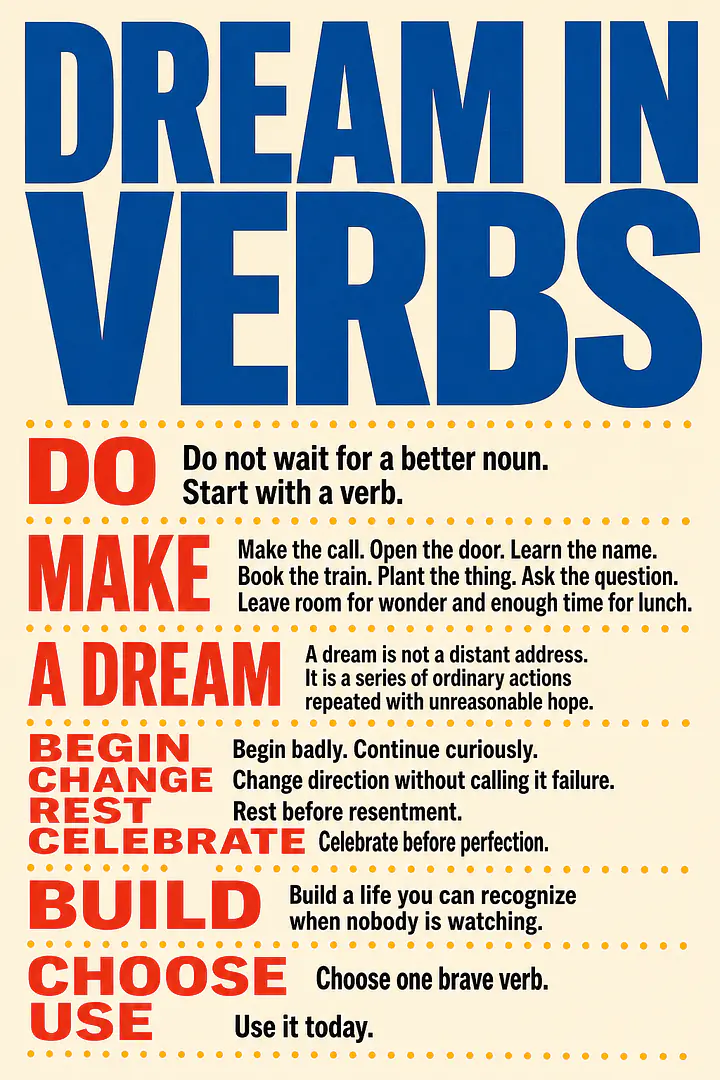
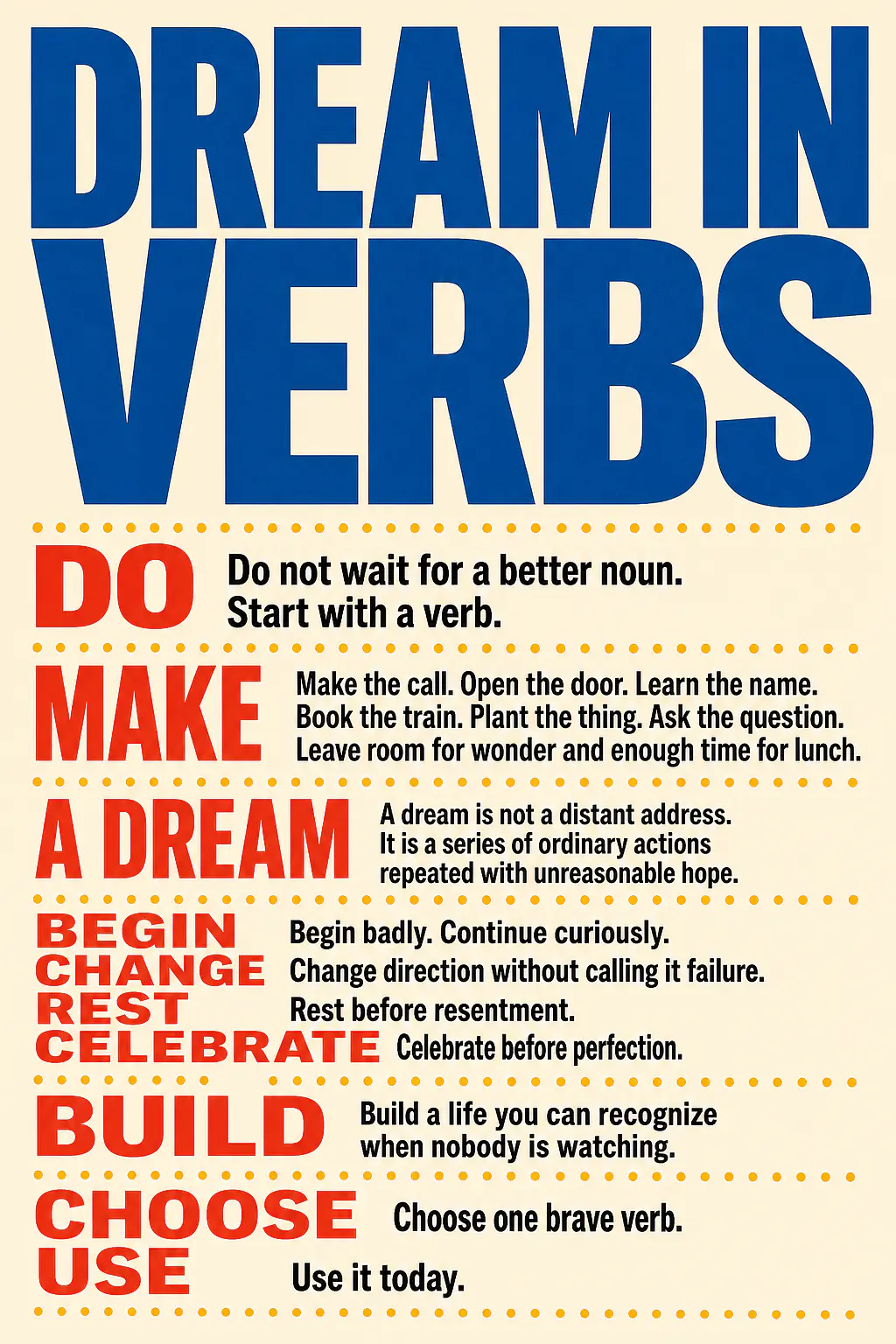
DREAM IN VERBS is an extensive, English-language manifesto that calls for action: a bold headline, striking verbs as eye-catching anchors, and dense ragged text create a readable hierarchy. The precisely defined color and typography combination merges strong accent marks with a calm layout, making the poster a focused visual highlight.
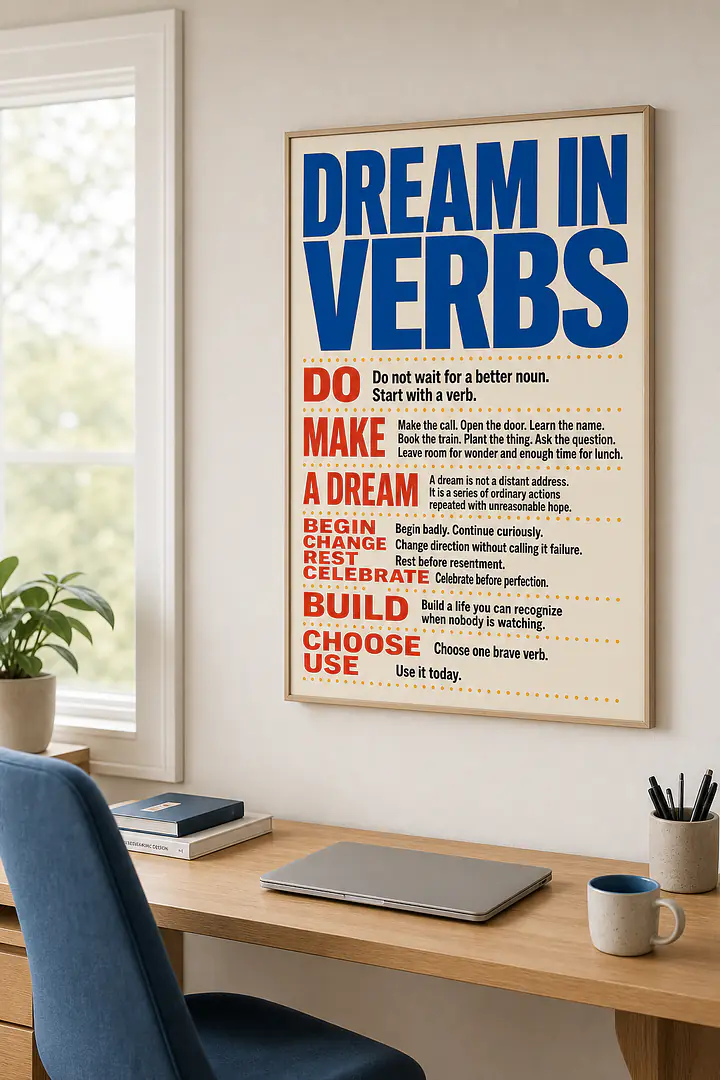
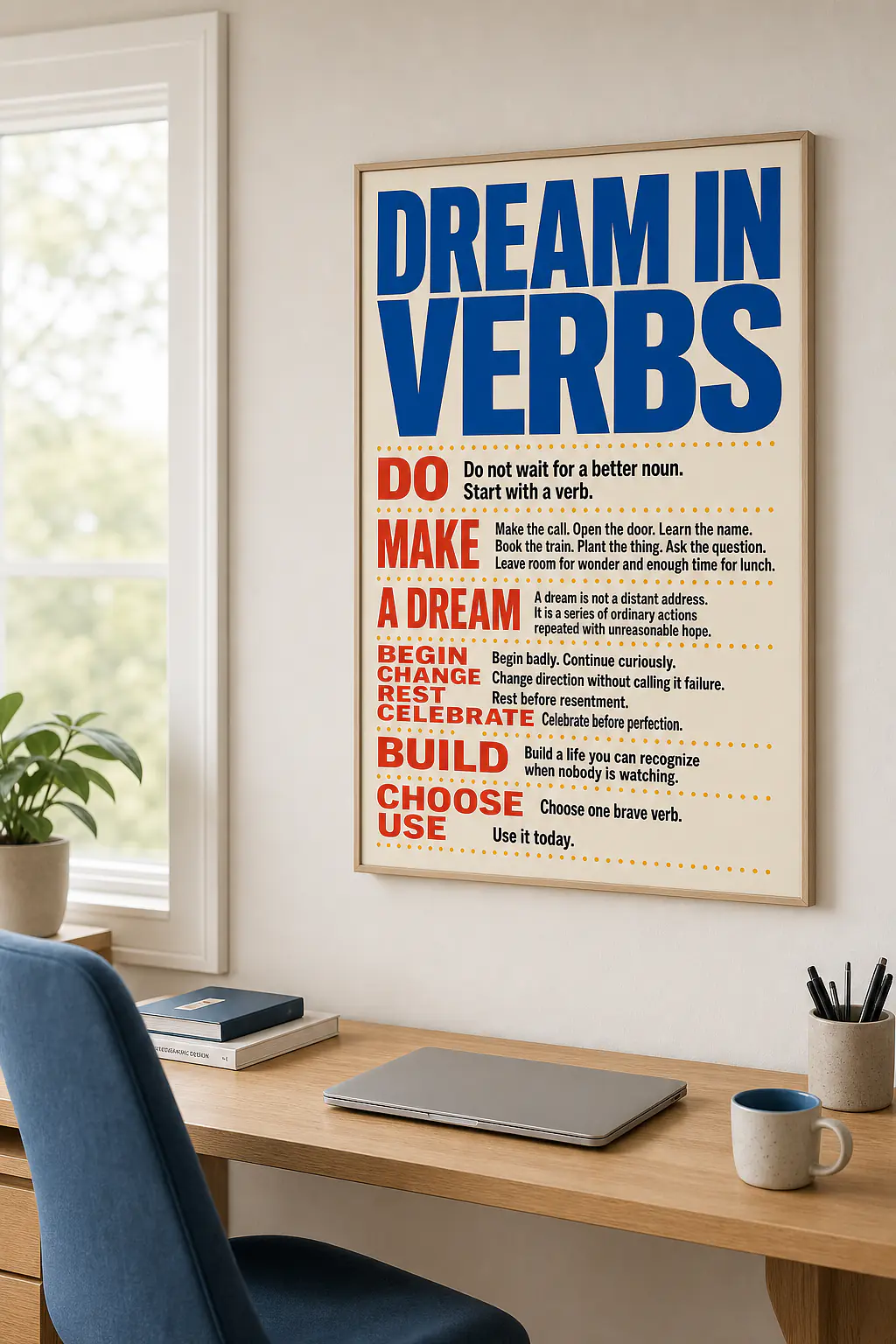
The poster is designed in portrait format with a clear text area, making it especially suitable for creative home offices or workspaces with light wood and minimal color accents. Available as a poster, framed poster, or canvas in multiple sizes; the AI draft defines the typographic hierarchy, colors, and graphic elements, while the exact text must be manually set and proofread before production.
- Striking typographic hierarchy: large headline and highlighted verbs ensure quick readability and a strong motivational impact on the wall.
- Flexible product selection: available as a poster, framed poster, or canvas in various sizes for different room dimensions and hanging situations.
- Production note integrated: exact text must be manually set and proofread, ensuring the final print image is precise and free from typesetting errors.
Frequent Questions on DREAM IN VERBS – Manifesto for a Life Lived
What wall art size fits above a sofa or sideboard?
Use the available wall space and the width of the furniture as a guide. Mark out the outer dimensions of the planned format before making your decision.
How do I combine multiple wall pictures?
Connect the motifs through their color scheme, theme, frames, format, or recurring spacing. A main motif can provide a clear starting point for the arrangement.
How do I plan a gallery wall before hanging it?
Lay the pictures out on the floor or work with full-size paper templates. Check the outer contour, spacing and sightline before marking the mounting points.
Are a frame or hanging hardware included with the wall art?
This depends solely on the respective product description and the selected format. Please check the scope of delivery and the specifications before placing your order.
Why may colors appear different on the screen?
Display settings, ambient light, and photography lighting affect how colors are displayed. Compare multiple product and detail views and take the existing room color into account.
How high should a wall picture be hung?
There is no universal height. Align the center of the picture with the usual eye level and, when placing it above furniture, also consider the distance from the top edge of the furniture.
How do I mix portrait, landscape, and square formats?
Use a shared axis or recurring gaps. Distribute large, dark, or high-contrast motifs so that the overall group remains visually balanced.
Which wall art is suitable for a child's room?
Choose a format, motif and position that suit the room, furniture and viewing height. A flexible group of pictures can be supplemented or rearranged more easily later.

Assessing Wall Design in the Room: Size, Sightline and Spacing
The desired effect is created by the relationship between the design, the open wall space and the existing furniture. Measure the usable width and height, and mark the planned outer contour at its actual size. Then view the position from the room’s typical viewing directions.
Consistent spacing connects individual pictures or designs into a harmonious composition. Take doors, windows, lights and furniture into account, as they may conceal parts of the wall. For wall decals, also check whether the specific surface is suitable according to the product information.
- measure the usable wall area rather than the entire wall
- simulate the design size with an actual-size outline
- define the sightline and relationship to the furniture
- take spacing and future use of the room into account